
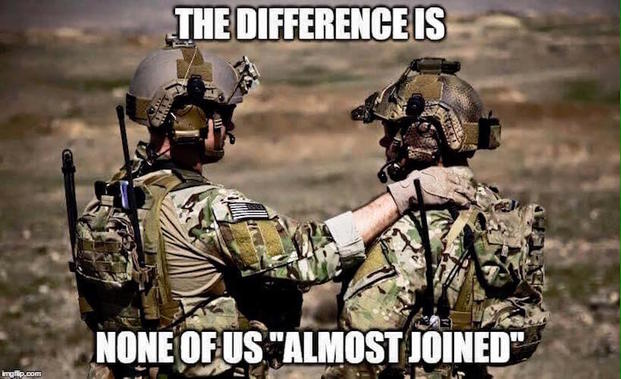


One the biggest compliments I ever got was from my old Partner in Crime, JR Madrid.
He said that when stuff hits the fan, I’m the guy you want to be around. He explained it as that I just seem to automatically know what to do.
I really can’t say why JR said that. But I do know this. When stuff happens, there’s something inside me that automatically switches on and I take over.
To me, that’s the difference between being a boss and a leader. Boss is management and making things happen. Leading is taking people into a situation they wouldn’t normally go into, making the calls, and making the impossible happen.
There’s several pieces to being a leader.
- One is training. One of the best courses I ever went through was the Primary Leadership Development Course in the Army. This is what we call Basic NCO school or Sergeant school. Want to know what it’s about? Yeah, there’s a combat element to it, but what it teaches is taking care of the troops. A lot of people think the mission is the most important thing in the military. It is. But what this course teaches is the troops are your most important asset. Without them, the mission doesn’t happen. Therefore, you take care of them.
- Even more training. Training builds confidence. An example is my knowledge of First Aid and Emergency Medicine. I’ve gone through so many courses that it’s drummed into me what to do. It’s the difference between saying there’s nothing I can do and preforming a tracheotomy.
- Experience. There’s only one way of getting this. You do it. You can get experience by running simulations and that works great. But since no two situations are alike, that kind of experience is a starting point. As example here is an incident that occurred when I was a young deputy. I’d seen how the fireman did things and retained it. One day, I was with my parents up on the north edge of our property. We were fixing a fence and this required replacing some barb wire. The wire had been stretched and was being nailed into place when the wire stretcher slipped. Without thinking, my mother reached out and grabbed the wire. The barbs dug into her hand, and she couldn’t open it to let go. Everyone else’s first reaction was to cut the wire (which eventually they had to, But…). But there was a lot of tension still on the wire. Had they cut it, the wire would have ripped her hand in half. That’s where that thing I’ve spoken of stepped up and said, “Here’s what you do.” Since the fence puller was loose, I got it. We straddled her hand and used it to get some of the tension off the wire. With the fence puller holding the tension, we cut the wire without having it rip her hand apart. Directing her to keep her hand above her heart, I took her to the ER and Dr. Thomas fixed her up.
- Initiative – This is probably the single biggest thing that separates the boss from the leader. The willingness to do what needs to get done, even if it’s the wrong call. My best example would be an incident that happened at Fort Riley. I was working MPI at the time and we were trying to run down a peeping tom. I had two young MPs with me who’d been instructed to wear civilian clothing. They showed up looking like Don Johnson from Miami-Vice. So, we’re driving around when a call comes over the radio. The call was directed towards EMS who shared the channel with us. An ambulance was need at such and such a location, a little girl wasn’t breathing. I looked at the kid that was driving and said, “We’re a block away. let’s go.” Because we responded, we saved her life. Had we waited or not taken the initiative, she would have probably died. Taking the initiative is something that can’t be taught.
To me, that’s what being a leader is about. it’s about a willingness to take charge when the deck is stacked against you.
Everything else is just being bossy. and we all know what boss spelled backwards is.
So, yeah. I’m the guy you keep in a glass case. There’s a hammer next to the case. And there’s a sign that reads “When the crap hits the fan, break glass and release Rich. Then follow him. He’ll know what to do.”
I guess that makes me a leader!
Discover more from William R. Ablan, Police Mysteries
Subscribe to get the latest posts sent to your email.
 William R. Ablan, Police Mysteries
Great thoughts, Rich!
LikeLike
6 – Sunday–0930 hrs
A few minutes later, we arrived at the state line.
“Seems like a dozen years ago we were here waiting for Max,” Robert said.
“It does,” I agreed.
The year before, Robert, RJ, Pam, and I parked here. We wore bulletproof vests and carried M-14s and shotguns. We waited to rescue Max while he made a covert buy of dope from a grow house.
We didn’t need to go in. Instead, months later, instead of saving Max, I’d kill him.
I shook my head, let it go, I told myself. We’ve bigger fish to fry right now.
But this morning, a couple of reserve officers leaned against an old patrol car waiting for us.
Yellow crime scene tape ran from the fence to a red traffic cone on the side of the road. From there, it ran to several other cones and then over to the fence again.
Inside this large, ribboned box were two patrol cars.
“We all good here?” I asked the two men. Both looked tired.
“We’re good.”
“Good. Stand by.”
Tony got the ruck from the back of the Suburban. He pulled out a Pentax 1000. It was the same as the camera I’d taken to the Gulf War and used at a dozen crime scenes since.
He handed it to me.
“You’re better with this than I am,” he said. “Is it loaded?”
I nodded, looking through the small window in the back. I could read the film label through it. “ASA 400 black and white.”
“Whatever that is,” he said.
We stood outside the tape looking over the crime scene. There was something not adding up here. It looked like an accident, but then, it looked like attempted murder.
Why did I think that?
Someone once said, the Crime Scene tells the story of what happened. You must read it and let it take you to a proper conclusion.
I wondered which conclusion it would lead us to.
“Let’s go,” Tony said.
“What do you want to do first?” Robert asked.
This was Tony’s crime scene. That left us in the role of being two more bodies to help. Whatever Tony said, we’d do.
Tony swung the ruck off his shoulder and sat it on the ground. Opening it, he gave us five or six yellow and numbered crime scene markers each.
“We’ll do a lane search,” he said. “We’ll start here on the north side and walk slowly south. We want to identify footprints and be able to follow them. Look for scuffs where bodies might have fallen. Most importantly, we want to find evidence to show where Bryan was assaulted.”
That was a simple order.
“Let’s stay online, move slowly, and we’ll stop if someone sees anything. Questions?”
We spread out so there was about five feet between us.
Since there were only a few of us, and the area so broad, we’d reach the south end, spread out again, and repeat the process, only walking northward.
We’d do this until the area had been covered.
“Move out,” he said.
There had been a drizzle the evening before. It wasn’t enough to turn the scene into a mudhole but rearranged the dirt enough so the old tracks were softened and almost hidden. That caused new tracks to pop out.
The rain had formed a kind of natural filter that helped us out.
I had the area closest to the road, and all I saw was where both patrol cars left the road. I also found the footprints of EMS, Dana, Bob, and Jerry.
Some disturbances of the crime scene had to happen. After all, both men were down and both had to be placed on gurneys and taken to the hospital.
It wasn’t until we started coming up on Tom’s cruiser that we started seeing evidence associated with the case.
“Mark the cruiser,” Tony told Robert, who was covering the space next to him.
“Marking it with lucky number thirteen,” Robert said. He placed the marker directly on top of the car.
“Hold one,” Tony said. He wrote information in his notebook as part of the crime scene sketch he was making.
“Got footsteps here,” Robert said. “Looks like this is where Tom stepped out to make his approach.”
“Mark it.”
Robert put number fourteen on it.
“Marked,” he said.
We moved slowly. There was no sense in hurrying. We had all morning, and the weather was nice.
“You can see where Tom approached our car, checked the trunk, and went behind it and around,” Robert called.
“Noted. Mark the APD cruiser,” Tony said, and paused long enough to write it down and add it into the sketch he was making.
“Marked.”
Tony and I had little to do except move forward. Robert was doing most of the heavy lifting on this one.
“Here’s where Bryan got out,” Robert said. He marked it without being told and called the number to Tony.
“He’s walking up to the front of the car.”
“Let’s stop here,” Tony said. “Robert, let’s close it up a little.”
We moved in closer to stand a few feet away from the car.
This is where it all happened.
Tony was careful not to mess up the crime scene as we got closer. If the crime scene tells the story of what happened, then we didn’t want to add anything to the story.
I got pictures of the path Tom had taken. I wished we’d brought the video camera.
“Slowly trace his footsteps,” Tony said. “Point out the path he walked.”
Robert stayed at least three feet away from the path defined by Bryan’s footsteps. Bryan’s tracks stood out. He still wore jump boots.
“Something’s really wrong here,” I said.
What Bryan would have been involved in was a “Felony Stop.” Tom had even advised him of such.
What Bryan should have done was to pull the twelve gauge from its rack, chamber a round, and then order everyone out of the car and down on the ground.
He would have left them lying in the dirt until help arrived.
This was a tactic we practiced constantly, and he’d have fallen into it without even thinking.
But not here. Bryan got out of the car and then walked to the front of the Caprice. I could see where he stopped in front of the car. He’d even moved around a little.
“Yeah,” Robert said. “I see what you mean. Looks like he was leaning and waiting.”
That was a very casual maneuver for someone who had just been in a high-speed chase.
Tony shook his head.
He didn’t have to say it. The evidence didn’t support what we were supposed to believe.
“Stop there at the front of the car where he was standing. Mark it,” Tony said, “and point down to it.”
“Hang on.”
Robert put a marker at the point where Bryan curved around the front of his patrol car. Then he pointed towards the path. And finally, to where Bryan had waited near the car.
I got down on one knee, framed the shot, and took the picture.
“Perfect. Let me get one more. Only put this ruler next to the footprint.”
Robert did, and I took another picture.
“Okay, where does it go from here?”
Robert paused and looked from where Bryan had stood. His footprints showed he’d walked over to the fence.
“He walked over there,” Robert said, pointing.
“I wonder why?” Tony asked no one in particular.
Robert followed the footprints to the end. The dirt was disturbed where Bryan had fallen.
We could see Tom’s footprints converging on Bryan. He got about a meter from his location, and the footsteps stopped.
Then the footprints seemed different, as if Tom were moving away from Bryan, and then a skid and evidence of a fall.
“This is where Tom fell,” Robert said.
That was easy to read. The bullet had impacted Tom as he fell back. He’d stumbled, and that put him hard into the dirt.
More footprints came from the road. A heavy work boot and they intersected where Bryan was.
Dana’s footprints ran to where she snatched up the gun and then went to Tom and then back to Bryan.
“Dana’s?” Robert said.
We hadn’t thought about getting her boot prints.
“Here’s where everything stops,” Robert announced, marking the location.
“This isn’t adding up,” I said to Tony.
Tony nodded and didn’t say a thing.
Tony circled the location, looking. He was turning the crime scene over in his head.
“Here’s Tom approaching,” he said. He was just saying it again to see if he could find holes in it. “He gets here and stops.”
“It looks like he’s trying to move back.”
“That is where Bryan rolled over with the gun,” Robert said.
A gun pointed at me would make me step back too.
“And this is where he fell,” Tony said, pointing to a disturbed area.
He marked it and said, “Get some pictures of this area here.”
More markers went down. The camera shutter clicked half a dozen times before Tony felt comfortable.
When we reached the south end, we spaced ourselves out again and walked north. There was little to identify as belonging to the scene.
The third and final sweep south was the same story.
Only then did we go to concentrate on where the shooting had happened.
Tony got out the tape measure. Now we were getting measurements. Everything else we found was photographed.
Getting the measurements took an hour. But the scene still felt like it had something to offer.
“I’m going to walk around,” Tony said. “Maybe I’ll find something we missed.”
I nodded.
My eyes traced the footprints and where the officers had fallen.
“The crime scene tells the story of what happened,” I muttered.
“What was that, Will?”
“Just putting the story together in my head.”
“And?”
I was looking around, especially in the area where Bryan had fallen.
“The story isn’t finished. We’re missing an element?”
“What?”
I nodded to where the Antonito officer had fallen. “The other car.”
Robert looked down and then looked at me with wide eyes. “Where are the tracks of the other car?”
Any tracks before the rain last night would have been damaged. The tracks of the two patrol cars were clear and pristine. It seemed logical to think that any tracks from a third vehicle would also have stood out.
Yet, there was no third set of tire tracks.
“No tracks,” Tony said. He looked around and shook his head.
The story was different, and only one scenario fit the picture.
“Bryan was never after another car,” Tony said. He voiced it for us because we didn’t want to think that anyone would want to kill someone else.
“But why?”
The word “Why” is called a motive by the detective mystery writers. In the real world, we don’t have to prove a motive. All we had to prove was that someone had done it.
But here, the question of “why” demanded an answer. We didn’t have the answer, and we needed it.
The question we were all wondering was, why would one police officer want to kill another?
“There was no other car,” Tony said as he came over. He’d arrived at the conclusion without overhearing Robert and me.
“Why would Bryan lie about there being another car?” I was still trying to nail it down in my mind.
Tony said, “You were on to something when you thought he was setting someone up. It was bait, maybe?”
“To bring Tom here and do what?”
“Shoot him,” Robert finished. “Kill him.”
If so, it worked.
We were quiet for a moment before Robert said, “I think this case just went someplace we didn’t expect.”
“And that’s why there was no siren,” I said. “We don’t hear it because he never turned it on. He never turned it on because he was chasing nothing.”
The evidence said this was a setup. Bryan’s only hope was that we read it wrong.
But we weren’t reading it wrong. We all knew that. And just like that, a case that seemed unsolvable was solved.
“The question isn’t where the other car went,” Tony said. “But why would Bryan want to kill Tom?”
I took out my cellphone and dialed the Sheriff’s office.
“Conejos County Sheriff’s Office. May I help you?” James said.
“James.”
“Yes, Sheriff.”
“Get hold of Alamosa PD and ask them if they have an officer who can watch Bryan at the hospital. I’ll get someone up there as quickly as I can. Tell them he’s a suspect in an assault case and to treat him as such.”
“What?”
“Just like that. Make damn sure Bryan doesn’t go anywhere, and if they have questions, call me.”
“Yes, sir.”
I hung up and looked at the other two men.
“Shit!” I said.
“That’s what we’ve stepped into,” Robert said. It wasn’t funny, wasn’t meant to be funny, and we knew it.
I knelt and studied the area where Tom had fallen. I’d come within millimeters of losing one of my detectives.
“Before we pull Bryan in and Mirandize him, we better have our ducks in a row,” I said. “What would it take to prove this wasn’t an accident?”
“How about the cattle prod?” Robert said.
I couldn’t imagine someone taking a cattle prod and holding it to his or their head long enough to produce a burn.
But then, people killed themselves every day. Compared to pulling the trigger of a gun, a cattle prod was small potatoes.
“Where is it?” I asked.
What I should have asked is, “What did he do with it?”
“That is a question,” Tony mumbled.
He pulled out his pocket sketch and said, “Gather round.”
We stood next to him, and he held the sketch out at arm’s length.
“Damn,” he said.
“What?”
“The arm isn’t long enough,” he said.
“Forgot your glasses?”
“No, I’ve got them right here.” He reached into his shirt pocket and put them on.
“There. That’s better,” he said.
He looked at the sketch and then around. “Let’s see. Bryan stopped here and got out of the car.” He said, looking as he tapped the drawing. “And he walked around to the front of the car.”
He traced with his finger and stopped where the hood of the car was.
“He stood here,” he said, tapping the drawing again and looking directly in front of the car. “Why did he stand here for a while?”
All three of us looked up from the rough sketch to the front of the car. There were multiple footprints and scuffs there.
“Maybe that’s where he shocked himself,” Robert said.
“OK,” Tony said. He bent to look at the scuffs. “If you were just about to pass out, that makes sense.”
He continued looking at the sketch. “But then he walks to the fence line and comes back. Why did he go over there?”
“To get rid of the cattle prod,” I suggested.
Tony started walking towards the fence line, and we followed. Once there, we stood and stared across it. While not exactly a sea of sagebrush, there was enough out there.
“I’ll bet he threw it,” Tony said.
“No bet,” Robert said.
He was thinking the same thing. Crooks almost always threw away the guns they used in a crime.
Why not a cattle prod?
“How do you want to do this?” I asked.
“How much do you think one of those weighs?”
“Not much. Maybe ten pounds with batteries in it,” Robert suggested. Having never used one, I had no clue.
“He isn’t John Elway shotgunning a ball, but let’s assume Bryan could toss it a hundred yards.”
That was being generous, I thought. But then, Tony always erred on the side of caution. He’d give the extra yardage even if he knew it was impossible.
“Let’s walk down about a hundred yards, cross the fence and do another lane search,” Tony suggested. “We walk south past here about another hundred yards, spread out again, and repeat until we’ve gone about a hundred yards that way.
I looked out at the sagebrush. Snakes probably weren’t out yet, but it had been warming up.
Just be careful, I reminded myself. And be ready to run like hell if you see one.
“I’ll get the tape measure and the camera,” I said.
“And a large evidence bag.”
“How big a bag?”
“One like we’d put a rifle in would work,” he answered.
I went back to the ruck and rooted around in it. The bags were in the outer pockets, and there was one that would work.
I hustled down to join them as they walked along the fence.
About a hundred meters down, we stopped. Tony stooped and grabbed the wire under him. He pushed it down to pass through. Robert and I held the upper strand up and away from him.
We repeated the process for Robert.
When it came my turn, I put the equipment on the other side of the fence and slipped between the strands.
Tony had made it look easy. I was a little taller and had more muscle, which meant bigger. I was also much taller than Robert. In almost every situation, that had been an advantage.
Not this time. My foot caught the wire as I went through, and I fell into the dirt.
“Damn,” I said.
“You okay?” Robert asked.
“Just hurt my pride,” I answered as I got up.
I dusted myself off and picked up the gear.
“I hate sagebrush,” I said eyeing each bush carefully.
“Why?” Tony asked.
“Snakes,” I answered. I always associated sagebrush with snakes.
“I remember.” I saw him smile, which made me wonder if he’d already seen one.
“Okay,” Tony said. “Let’s spread out, arm’s length apart. If you have to go around a bush, do so. But look and make sure nothing’s in it.”
I eyed the sagebrush and swallowed the acid in the back of my throat.
“Move out,” Tony said.
Sweep one, from north to south, turned up nothing. That was expected because a child could toss ten pounds further than that.
Then we moved down some, spread out again, and made sweep two, only this time from south to north.
Sweep three was the same story, as were four and five.
It was coming back on sweep six we got lucky.
“Got a battery!” Robert said.
“What kind of battery?”
He bent down to look at it. “It’s a Duracell D cell. Looks new.”
A few steps later, I found a second battery.
And then, “Bingo,” Tony announced.
“What is it, Tony?” I asked.
“It’s our cattle prod,” he said, pointing.
Lying within a large sage bush was a shiny black aluminum tube about two feet long with a rubberized handle.
Looking around, we saw where the prod had hit the ground and bounced before stopping here. The landing had damaged it, and the cap had come off, spilling the large D-cell batteries about.
Whoever threw it hadn’t expected us to go looking for it.
“What is it you’re always saying? Something about Parker’s Law?” Robert asked.
“Parker’s Law,” I said. “Crooks don’t plan on getting caught, and that’s why we catch them.”
Tony nodded and then offered another revelation. “And if they thought about getting caught, they’d never commit the crime.”
I started taking pictures. A couple of establishing shots, and then closer. Tony still had a marker and had placed it next to the cattle prod.
There was an orange price sticker on the handle, and after getting a couple of closeups, I zoomed in on the sticker.
The coloring was still bright, and the price was readable. So was the store it had been purchased from.
The price tag read “Big R” and “Alamosa.”
It had been purchased locally.
8–Sunday – 1145 hours
The cattle prod handle had a hole in it so you could hang the prod on a nail in the wall. Using a piece of bailing wire from the fence, I made a hook and then picked the prod up by slipping it through the hole. I slipped it easily into the evidence bag.
That left the batteries. I photographed each one and then handled them by the poles to minimize the chance of destroying fingerprints. I was thankful for the gloves now.
The dust kicked up had already dusted what looked like at least one good fingerprint. I was careful to get a good picture of it.
We got our measurements and then secured it all in a locked bin in the back of the Suburban that only I had the key to.
We rejoined Robert.
“This isn’t good,” he said. He was thinking about the political ramifications of the incident.
Tony went back to where Bryan had fallen and then rolled to fire on Tom.
“What next?” I asked. It wasn’t like I didn’t know. This was Tony’s case.
“We need to get everything together and go see Daniel.”
“On a Sunday?” I asked.
“Got to do it today,” Tony confirmed, and then he reminded me, “We have a guard on him. Technically, the clock is ticking. He is in custody.”
I must have been tired. I’d forgotten that.
The law stated that I could apprehend someone on suspicion of a crime. But it also said I had 72 hours to get them charged.
Since we were working, there was no reason the Assistant DA shouldn’t as well.
Robert nodded in agreement.
“Can we keep Bryan in the hospital a little longer?” Tony asked.
“I don’t know.”
That was within the purview of the doctors. The burn probably wasn’t life-threatening.
Now, if the electric shock had scrambled his brain, that was another matter. But we weren’t qualified to make that call.
If the worst-case scenario happened and he was released, we’d arrest him and toss him in jail.
But I didn’t even want him close to Tom or Glinda. That meant keeping him somewhere else.
“We get everything together and get the case filed soonest,” I said.
“That’s the plan,” Tony said. “Oh, we need to get Shep down here.”
He meant Don Shepherd from CBI. He’d need to do a double check on us.
“I’ll call him,” I said.
“Good. I’ll call Daniel and tell him we need to see him,” Tony said. “
“We’ve evidence to suggest this was a setup,” I said. “But can we get a little more?”
“Such as?”
“Something that would prove there was no other vehicle. I mean, the absence of tracks is pretty good, and so is Dana’s statement. But I’d like to really nail it.”
Tony thought for a moment before saying, “I know where to get it.”
“Where?”
“I’m going down to the Perlite plant.”
“You think maybe the guards saw something?” Robert asked.
“Yes.”
He was talking about the Perlite processing facility just south of Antonito.
The actual mining happened further south, near San Antonio Mountain and in New Mexico. Trucks brought the ore to the plant for processing. From there, it was shipped across the country to be used for a variety of purposes.
The plant provided a decent wage for a lot of local people. Unfortunately, the number of people working there was limited. The money it brought to the community just wasn’t enough to turn Antonito into more than a sleepy backwater in the world.
“Great idea,” I said. “Assuming they weren’t sleeping on the job.”
“Is there any more to learn here?” Robert asked.
Tony consulted his notes and then looked around. “I think we got it,” he said.
“Good. Let’s get back to the ranch,” I suggested.
“I’m going to talk to the guards,” Tony said. He walked to Trigger. Using the spare set of keys he’d grabbed, he started it and drove away.
I called the reservists over. “Let’s get this tape cleaned up.”
“Let me help,” Robert said.
“Appreciate it,” I said.
We started pulling down the tape and cleaning up the scene.
“You doing okay, Will?” Robert asked.
“You know, the next person who asks that is going to get shot.”
“I was asking if you’re tired.”
“Oh,” I said, embarrassed at my reaction. I turned to the reservists.
“I need to get some people up there to watch Bryan. One of you want to make some money.”
“Yeah,” one reservist said.
“Then get to the Alamosa Hospital. I’ll have someone relieve you in eight hours.”
“Thanks, Sheriff,” he said, and he and his partner left.
Once Robert and I finished cleaning up, I looked at my watch. The clock was ticking. We had 71 hours to get the case put together and presented to the DA.
Somewhere in there, we’d have to get him before a judge.
It was going to be a long three days.
“When’s RJ and Pam coming back from Napa?”
“They’re leaving in the morning. It’s a long drive, and I wouldn’t expect to see them before the day after tomorrow.”
“Be nice to get them back,” Robert said. “That’s two more bodies we can throw at this.”
“We can use them. But I’ll be glad to get Shep down here.”
“The dudes a wizard,” Robert said.
I changed the subject.
“You look like you could use something to eat,” I said.
“I could,” he answered.
.
“Eggs and ham?” I asked.
“Hermano, you’re my hero,” Robert said. “I’ll drive our car back in.”
As he left, I took my Captain Kirk cellphone from my pocket and flipped it open.
This new model allowed me to put in twenty numbers on something they called speed dial. One number I’d put in was the Narrow-Gauge Restaurant.
I called and placed an order for three plates to go of eggs over easy, ham, hash-browns, and toast.
Thirty minutes later, Robert and I were sitting in my office eating a way overdue and lukewarm breakfast.
Too bad we didn’t have any fresh Hatch green chili. That would have really made the meal. Even a cold one.
He sat down on the other side of what had once been his desk. I pushed his food towards him.
“Thanks,” he said. He opened the Styrofoam container and attacked the meal. I assumed he’d eaten breakfast.
He hadn’t. He attacked his breakfast like a man who hadn’t eaten in a month.
“How’d the mine go?” I asked once he slowed down.
“The guard from last night is off,” he said. “Thought that might happen. But I got their contact info.”
“I put in a call to Pueblo CBI like you asked.”
“And?”
“And some good news. The Shepherd is in the area. They got hold of him, and he called me back. He’ll be here tomorrow.”
“Great.”
“Did I ever tell you about the first time I met Shep?”
“Never,” Robert said. He was enjoying the eggs so much it almost made me wish I’d ordered two meals each for us.
“The Shepherd was one of my instructors at the Academy. He showed up at the Delta Academy in a big four-wheel-drive pickup.”
“You didn’t go to Golden?” Tony asked.
“No, I went to the Western Slopes Academy,” I answered.
“That was out at the Vo-Tech Center, wasn’t it?” Robert asked.
“Was,” I answered. “Something happened, and they were asked to leave. They put us up in a building that migrant workers in the area used to live in.”
“Talk about low rent,” Tony said. “Anyway.”
“Anyway, Shep shows up wearing cowboy boots, a rodeo buckle big enough to use for a shield, and a Stetson that seemed to be made for someone bigger than him.”
Not that I would have wanted to meet that person. John is as big as I am and twice as broad.
“I remember he got up in front of the class and, in that cowboy drawl of his, introduced himself. He says,” I dropped my voice down into a Clint Eastwood growl that mimicked Shep’s voice. “‘I’m from Wyoming. That’s where men are men and sheep live in constant fear!’”
Tony and Robert laughed, and finally Tony said, “Couldn’t get away with that anywhere except in a room full of cops!”
The phone rang, and I picked it up. “Sheriff,” James said. “It’s for Tony, line three.”
Tony picked it up. “Internal affairs, Investigator Madril speaking.” He listened to the call for a second and then said, “About three fifteen this morning. Did you see the Antonito patrol car out and about?”
He paused again. “Hang on,” he said. He took out his notebook and then made a couple of notes. “How about another car just before it? It would have been moving fast.”
He listened for a moment and scribbled more notes in shorthand.
“Was Antonito running lights and siren?” More scratching of pen on paper as it made notes.
“Who was the truck driver?”
More scratching.
“Can I ask you to come in and give me a statement?”
Another pause, and Tony said, “That’s good. I’ll see you here.”
“So, how asleep were they?” I asked.
“He wasn’t,” Tony said. “Only one guy was on. Remember Ron Atencio?”
“Not really,” I answered.
“He was probably just a kid when you left,” Tony said. “He remembers seeing the Antonito PD car going south about 2:30 AM.”
Interesting. “How sure is he about the time?”
“Very. He had a truck come in about the same time, and while he was weighing it, he saw the car. The time the truck came in was entered into his log.
“Ron remembers the Antonito car wasn’t running lights and siren. The car was just driving south. No Lights. No siren. Just cruising.”
“What’s the lighting like there at night?” I asked. We’d have to get pictures of that. I could already hear a defense attorney asking about that.
“They have big floodlights,” Robert said, “and they light up the area; to include the highway, very well. They do that for the trucks turning in. He’d be able to tell it was our car.”
“How about a car headed south at a high rate of speed at about the same time?”
“Doesn’t remember seeing anything like that. He said it was quiet on the road. A few trucks, but not much more than that.”
And just like that, we had our first eyewitness testimony that there was no other car.
That supported what we found at the crime scene.
“But about forty-five minutes later, he saw our car racing south with overheads on.”
Forty-five minutes. That was a long time.
“Atencio said he hadn’t seen another car since before midnight.”
“No lights. No siren. That’s why we never heard it on the tape.”
Tony finished eating his breakfast. I us all some coffee and said, “When we’re finished, we go see Daniel,” I said.
The tape and the statements were the missing pieces in the case. They were sizeable pieces, to be sure, and that made it an almost airtight case.
Tony leaned back in his chair. The springs squeaked as he did so.
“We still don’t know why Bryan would want to kill Tom?”
9 – Sunday–1330 HOURS
Daniel Pompi rarely slept, but I’d never known the man to look tired.
He was one of those rare people who can get by just fine on less than two hours of sleep a day.
That blessing or that curse (depends on how you look at it) had doomed his one and only marriage.
And his kids were just like him. Maybe that’s why their mom didn’t fight for custody.
He and his kids were up day and night. They gardened, played games, and learned.
I was a little envious of his curse.
He was only fifty years old, yet Daniel had lived triple that. While the rest of us wasted our lives in the land of dreams, he was doing things.
It wasn’t a surprise that he was reading when we knocked on the door.
“You guys look tired,” he said when he opened the door.
He, of course, looked fresh as a daisy.
“Been a long day,” I said as we entered his house.
They lived outside of Alamosa on a large acreage. Daniel had put baseball stadium lights around the property so he and his kids could be out gardening in the middle of the night. That worked since his nearest neighbor was miles away.
“I would think so,” he replied. “We’ve been listening.”
He motioned over his shoulder at a police scanner in the kitchen.
“Then you know what’s going on?”
“Only the broad strokes,” he said. “What do you have for me, Tony?”
Tony handed him the hastily put together file he’d brought up. We’d instituted a checklist that went with each case that went to the DA. Daniel had worked with us to develop it.
While there was a checklist in this one, a lot of it hadn’t been checked off yet.
Daniel opened the file, scanned the checklist, and went on through the pages of notes and sketches.
With a nod of his head, he said, “Let’s go into the kitchen.”
The kitchen wasn’t what I’d thought I’d see from a bachelor with a couple of kids. I’d expected to see dishes piled in the sink, pots of food rotting on the stove, and the trash out of control.
Nope. You could have done surgery in the room.
“Sit down,” he said, motioning us to the chairs around the table.
He opened the file again at the table. As he read, his daughter came in.
“Toni,” he said.
“Yes,” the girl and Tony answered simultaneously.
“My Toni,” Daniel said with a laugh. “Make us some coffee, please.”
“Sure, Dad.”
As the girl began making coffee, Daniel continued to go over the case.
Toni flipped the switch on the coffeepot, and after a few minutes, the coffee machine began boiling and making steaming noises. The coffeepot began filling with the black octane that kept us going.
By the time the pot was full, Daniel had finished reading what we had.
“Not finished yet?” he asked, meaning the investigation.
“No,” Tony admitted. “I’ve got rolls of film to develop and a statement from the truck driver that is still being transcribed.”
“And what’s the deal with the Cattle Prod?”
“John Shepherd is in town. He’s going to lift fingerprints off it. I also want him to look over our evidence.”
“You think it was used on Bryan?”
“We’re thinking the burn on his forehead is self-inflicted.”
He looked over the few reports. “You haven’t said that in here.”
“It will be in my investigator’s statement,” Tony said. Tony pointed to the evidence custody document.
“Here,” he said. “The prod was purchased at Big R here in Alamosa.”
“Yes.”
“Might be worth seeing if they have a record or store tape that might show it being purchased.”
Tony wrote that down. Sounded like a lot of work figuring that one out, I thought.
Daniel flipped through it and found the field notes and read them. Then he flipped back to the crime scene sketch.
“No tracks of a vehicle he might have been chasing?”
“None.”
Daniel was familiar with the area. “There should have been hundreds of tracks.”
“It rained a little last night. While not much, it was enough to allow us to differentiate between old tracks and new.”
“Sorry, I didn’t know that,” he said.
“We needed to mention the weather,” Tony said. “Maybe we can get a report from the weather service.”
“Okay, you’ve done a lot of work.”
As Toni served us coffee, Daniel leaned back and stared at the wall. He was looking at every aspect of the evidence and statements.
“Here’s cream and sugar,” Toni said, putting them on the table.
Daniel ignored the coffee placed in front of him and kept looking at the wall. He was in what he called “Computer Mode” as he worked it through.
His face showed little reaction while he thought about things. It was easy to imagine his brain shuttling the information around, rotating it, examining it from every angle.
“Let me see if I got this all straight,” he said finally, but still looking at the wall. “Bryan goes chasing after a car that he couldn’t catch. He calls for help, and Tom goes to assist him. Now, a trucker who is a witness says she saw no other car on the road.”
“That’s correct,” Tony said.
“Then the perlite plant video shows the Antonito cruiser, but nothing it’s chasing. It doesn’t even have lights on.”
“Correct,” Robert said.
“We also listened to the tape of the radio traffic,” I added. “We did not hear a siren when Bryan was talking.”
“But you heard Detective Soward’s siren?”
“We heard the siren,” Tony confirmed.
“Got it,” Daniel said. “So, what happens while Tom is calling? Bryan stops responding to Tom’s calls.
“Tom gets there, sees him down, and as he approaches, Bryan turns over and shoots him in the chest.”
“That’s about it,” Tony said.
Daniel finally acknowledged the existence of the coffee and took a sip.
He nodded his head as if agreeing with some secret part of himself (I always thought lawyers were a little crazy).
“We’ve enough to file this as attempted murder. Certainly, First-Degree Assault.”
“So, we’ve probable cause to hold on to him?”
He nodded. “As long as you get him formally charged within 72 hours.”
“Good,” Tony said.
“You know,” Daniel said. “We don’t have to prove motive. But it would sure be nice to know why this happened.”
“We’re working on it,” Tony assured him.
I was interested in knowing what he thought and asked, “What do you think happened here, Daniel?”
He smiled when he said, “Contrary to what Freud said, it’s not always about sex.”
“Funny, but he mentioned it enough,” I said.
“He did. That’s why I’ve always leaned a little more toward Jung,” he said. Then he went on, “But here, I’m going to borrow from a different source.
“Human motivations can be explained through the acronym MICE.”
“The military intelligence types I knew used it to describe a motive.”
“It’s true.” Daniel was in full teaching mode now.
“I’ve heard it, too,” Tony said. “‘M’ stands for Money. I checked. Tom’s parents get his life insurance, not Bryan.”
“Glad you checked on that. What faith is Tom?”
“LDS,” I answered. “I remember ‘I’ is for Ideology. It don’t think Bryan is even a member of a church. That one doesn’t fit.”
“Maybe ‘C’ for conscious, but I don’t see it,” he said. “That leaves E for Ego.”
“Ego?” Robert asked. “You mean mad at Tom?”
“Yes,” Daniel said. “Somehow, Tom hurt Bryan. Or at least Bryan thinks so.”
And just like that, it made sense.
“Maybe it is about sex,” I said.
“You told me you talked with Tom and Glinda about their sleeping together,” Robert said.
“Pam and I did,” I answered.
“What’s this about?” Daniel asked.
“We asked them if they were sleeping together.”
“They denied it, right?” Daniel said.
“Right.”
“Glinda is Bryan’s wife. Correct?”
I nodded.
“Where is Bryan now?”
“SLV Regional Medical,” I replied.
“Got a guard on him?” Daniel asked.
“We do.”
“We just got our motive,” he said. “This was no accident.”
He closed the case file. “Yeah, you’ve more than ample evidence to hold him on suspicion of attempted murder.”
“So, Tom and Glinda lied to us,” I said.
“No,” Daniel said. “Maybe they’re not sleeping together.”
“But you said…”
“Yes, I did. But you see, you don’t have to believe that they are. The only one who has to is Bryan.”
“That makes no sense.”
“Makes perfect sense,” he said. “Weren’t the three of them in the Army together?”
“Yes,” I answered. “Stationed out at Fort Irwin.”
“Where’s that?”
About forty miles from Barstow, California,” I said.
“Sounds like the middle of nowhere.”
“It is. Why?”
“It might be useful to find out if there were any problems between them when they were out there.”
That hadn’t occurred to me.
“I’ll make a few calls,” I said.
“Good,” he said. “And talk to Bryan. Advise him and see what he says.”
“I can do that,” Tony said.
“Good. Then why don’t you go home and get to bed? Unlike me, you need your beauty sleep.”
10 – Sunday-1425 HRs
“Ever spent a night here?” Tony asked as we parked in the hospital parking lot.
“Twice,” I said. “Once when I had a pitcher busted over my head, and the second when I got stupid out of season.”
“Oh,” he said as if he expected me to explain the last half of the statement.
We went in and up to the third floor, where Bryan had a private room. Gary Martin was sitting in a chair outside the room. He stood as we approached.
“Sheriff,” he said.
“Gary, how goes it?”
“Long,” was the answer.
“No problems?”
“None.”
“Good.” I turned to Tony. “He’s waiting for you.”
“I’ll go in and talk to him.”
I sat in the empty chair next to Gary. “Set down. Where’s your partner?”
“Went down to get us some coffee?”
I lowered my voice. “Listen. We’re charging Bryan with attempted first-degree murder. I want you guys on your toes.”
“Oh,” he said. I’m sure he’d been wondering why they were sitting there.
“If he tries to escape, you stop him.”
“How?”
“You’ve got Tasers. Use them,” I said. “Then get APD up here and transport him to the Alamosa County Jail.”
“Wow,” he said and shook his head. “This just got interesting.”
“That’s the plan. Taser and transport. We’ll worry about everything else later.”
“Understood.”
I could hear Bryan and Tony talking, and I held up a hand for quiet.
“Tony,” I heard Bryan say. “I already know why you’re here.”
“And why is that, Bryan?” Tony asked.
He paused and then said, “Guards outside my door. They aren’t there to protect me.”
“Go on,” Tony said.
“They’re there to make sure I don’t go anywhere. I’m under arrest, aren’t I?”
“No sense in denying it,” Tony said. “But I would like to get your side of what happened?”
“Can I ask something?”
“What’s that?”
“How come Glinda hasn’t come up to see me?”
Tony paused before answering. “I thought she had.”
“Tom I can understand. I shot him. But Glinda is my wife.”
Tony paused. “Bryan, do you realize what you just did?”
It was Bryan’s turn to pause. “No,” he finally admitted.
“You just told me you shot Tom. Because I hadn’t started the interview and what you said wasn’t the result of direct questioning, the judge will let it in.”
I thought I heard Bryan say something.
“What I’m going to do,” Tony said, “is read you your rights. I want to make sure we’re both covered.”
Bryan had blown whatever alibi he might have tried right out of the water. He could no longer claim he didn’t know.
“Bryan,” Tony said. “I’d like to talk to you about what happened.
“But first, you have the right to remain silent. Anything you say can and will be used against you in a court of law. You have the right to have an attorney present with during questioning. If you can’t afford an attorney, one will be appointed to by the State. You have the right to stop answering questions at any time.
“Bryan. Do you understand these rights as I’ve explained them to you?”
“Don’t waste your time, Tony,” Bryan said. “I spoke with my lawyer.”
“I see.”
“Mr. Wheaton told me to take the fifth. I’m not to talk with you about this until he says differently.”
“I understand,” Tony said. “Can I talk with you then?”
“We’ll see,” Bryan said. I heard Tony stand up and start walking to the door.
“Then, have a nice day. And stay here. Don’t try to leave the hospital,” he warned.
“I won’t.”
As he reached the door, Bryan asked, “Tony, can you tell Glinda I’d like to see her?”
“Have you tried calling her?”
“She’s not answering,” he said after a pause.
Now, what’s that was about?
“Would you remind her she’s my girl. I’d die without her.”
III – INVESTIGATIONS
Thanks TW
LikeLiked by 1 person