
Genealogy is so much more that who begat who.
It’s an attempt to wrest family history from the sands of time.
Old newspaper accounts are a great way to do that. Letters are another as proven by my friend Joy Kidney and her series of books.
In my case, few, if any letters have been handed down. Instead, there’s stories handed down from around the campfire or on a winter’s evening.
Enter a game most of us have played called telephone.
If you’ve never played it, it’s really simple. We start with a handwritten message. It shouldn’t be too long. One person reads it silently and then whispers the story into the ear of someone next to them. The message is then whispered to another and then another. When it gets to the last person, that person says out loud what the message was. We then get to see how well it corresponds to the written message and how much it changed.
More often than not, that happens with family history. Unless someone took the time to write it down in the family Bible or it’s in letters that still exist, the story will change.
That’s why newspapers are good for family research.
What follows is are two accounts. I’ll present one today, one tomorrow.
The first account I received from my father. It’s the story of what led my ancestors to the La Jara area.
The second account is what was found in the newspapers of the time. Due to the game of telephone, I’ll go with the newspaper account for what really happened. It’s been unchanged and is closer in time to the telling.
THE VERBAL STORY
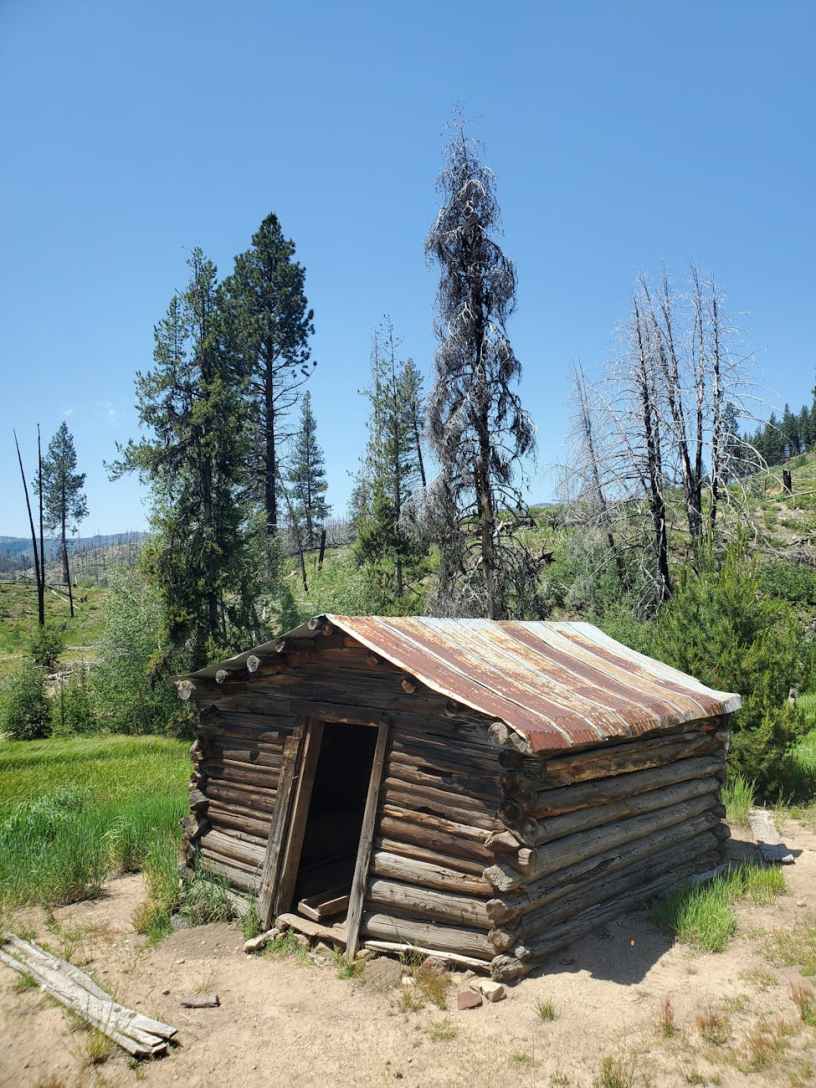
Once upon a time, there was a man named Augustine Muniz. He had a mining claim in the Cripple Creek, Colorado, area. I doubt he made much money off it. Gold has a magnetism all its own, and that’s why he worked it.
He was a tough old bird that didn’t take a whole lot from people. The old timers said he was the kind who would draw a line in the sand and defend it with his dying breath. They also said that I remind them a lot of him. They said I was always looking beyond the horizon. Worse, I’d sign up for any damn fool adventure that came down the pike.
I always reminded them that like him, I’d have great stories to tell when I was in old age home.
This story also concerns a local Native American who also resided in the area. I guess Augustine never knew his name because that hasn’t been passed down. He didn’t know if he’d done something to offend the man, but the man hated him. Maybe he forgot to say hello or maybe my Great Grandfather reminded him of an enemy. All we know for sure is this man hated him with a passion that bordered on insanity.
Several times he’d tried to provoke a fight with my grandfather. But Grandfather was a smart man. Augustine knew if he got into it with him, he’d sour the relations with the Native Americans in the area. He got along fine with them. Since the peace between the “Whites” and the Utes was tenuous he didn’t want to upset the cart.
So he went into town, bought his supplies, and did everything to stay out the man’s way.
Till one day he was at his camp when some Native Americans dropped in.
“Watch yourself,” they warned him. “He’s in town getting drunk and he says he’s coming for you tonight.”
Augustine thanked them and sent them on their way.
He put a log in his bed and covered it with a blanket. He then camped out under a tree near the small cabin with a rifle.
As he told the story, there was a full moon that night. Anyone who’s been on a battlefield knows lighting is important. Seeing your enemy before he sees you puts you in the position to dictate the battle. Today we use NVGs and flares to make that happen.
He had none of those but did have a full moon lighting everything up. Augustine could easily see for several hundred yards. And it put his enemy at a disadvantage because being in the shadow under the tree, Augustine was almost invisible.
Sure enough, along about midnight, he hears a rider coming. A few minutes later, about a hundred yards away, he sees the horse with a rider. The rider dismounts and starts walking towards the cabin. Even from that distance, Augustine saw the man carried a rifle.
What astonished Augustine was the man was dressed in full Native American regalia, including warpaint. He saw that the man was drunk because his path meandered and weaved towards the cabin.
Augustine stayed perfectly still, waiting.
After a minute or two of standing and listening, the man approached the cabin door. With a violent kick, he exploded open the door. Then with a yell, he brought up his rifle and emptied it into the bed. What had been a quiet night echoed with gunfire.
From under the tree, Augustine got his sight picture with his rifle and fired a single shot. The bullet tore through the man’s skull, blasting brains and blood out the other side. His enemy was dead before he hit the dirt.
When quiet returned, the only sound was the dripping of blood.
Knowing that the man had relatives who might avenge him, Augustine got his saddle, saddled his horse, and ran. When he got to Grand Junction, Colorado, he turned himself into the Sheriff there. He told the Sheriff what had happened. The Sheriff put him on a train for Alamosa, Colorado, and told him not to come back.
And he didn’t.
“Tomorrow,” as Paul Harvey would say, “Tune in for the rest of the story!”

If you’re a Veteran in crisis or concerned about one, connect with our caring, qualified Veterans Crisis Line responders for confidential help. Many of them are Veterans themselves. This service is private, free, and available 24/7.
Here’s how you can connect with a Veterans Crisis Line responder, anytime day or night:
- Call 988 and select 1.
- Text 838255.
- Start a confidential chat.
- If you have hearing loss, call TTY: 800-799-4889.
If you’re not a veteran or wish you can also take these actions:
- Call 911.
- Go to the nearest emergency room.
- Go directly to your nearest VA medical center. It doesn’t matter what your discharge status is or if you’re enrolled in VA health care. if not a veteran, go to your nearest hospital.
Find your nearest VA medical center
Discover more from William R. Ablan, Police Mysteries
Subscribe to get the latest posts sent to your email.
 William R. Ablan, Police Mysteries
Wow, your ancestors had more hair-raising experiences than mine did!
We were told that we descend from Betsy Ross of the first American flag fame. The name Ross is still being passed down, mainly as a middle name, although Betsy and John Ross had no children, and her others were all daughters. With more research, I’m satisfied that we do NOT descend from Betsy.
LikeLike
Very little of that story is true. I’ve discovered oral tradition isn’t very reliable. And example is the Malouff’s. They say they came here in the early 1900s. But I find mentions in the newspapers of their presence earlier. It’s good homework if nothing else.
LikeLiked by 1 person
I’ll be following up on it next week with the “Truth” and with some of the attitudes of the time, I have to wonder at how pure the “Truth” is.
LikeLiked by 1 person
It’s good that Native Americans saved Augustine, Rich. Yes, people who have done so much research into their family’s history impress me.
LikeLike