
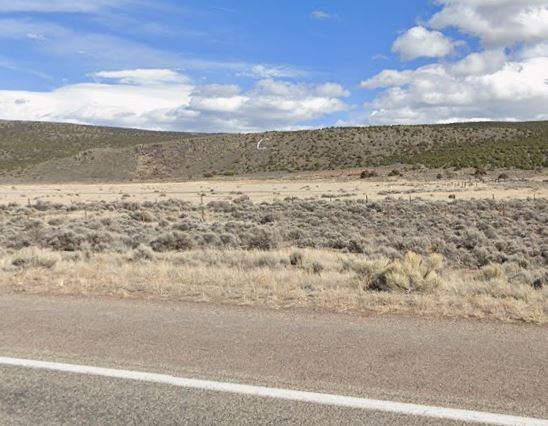
Every kid has someplace they spent the first few years of their life.
For Sheriff Will Diaz, that was a tiny, ancient town called Costilla, New Mexico. Located a stones throw across the Colorado-New Mexico state line, it’s one of those flyspeck places children tend to think of as awesome.
Since Will is a very thinly disguised me, I can talk a little about the town.
The Community of Costilla is mentioned only a few times in my novels. Only once is it actually involved with anything going on. Will does mention he spent his early years as a child there and his grandfather had a store.
In the real world, I spent the first four years of my life there. Even to a child it was obvious this was an old place stepped in history.
The area wasn’t settled until after the Mexican-American war. That’s when the Valley would become part of New Mexico and Colorado.
The area was ceded to the United States and that changed things.
Spain and Mexico had made attempts to push settlements up further north than Taos. Almost always, they were met with disaster. The Utes who saw the territory as theirs, were none too happy about intruders in their area.
And they accented the point more than once.
With the area under new ownership, the Government of the United States was eager to see settlements happen. That was especially true of the San Luis Valley. Garrisons of troops were stationed in the Valley. Treaties were worked out with the Ute Indians that would eventually move them out of the Valley.
The first attempt at colonization was in the late 1840s. With the Ute situation under some measure of control, Faustine Medina and Mariano Arellano moved north from Arroyo Honda, New Mexico to find pastures for their sheep. They built the first homes in the area. The settlements of Garcia, San Miguel (Later changed to Costilla), and Amalia were founded. The three towns were first noted in the 1850s census and between them was home to some 3000 people.
Each town centered around a roughly “U” shaped town center or placita. Often these included a church, stores, and some homes. From a tactical point of view, each community was a small fort. The shape made for easy defense. The thick adobe walls made them almost impervious to rifle fire, arrows, and spears.
Because of their proximity to each other, If one town were attacked, the other two could come to its assistance.
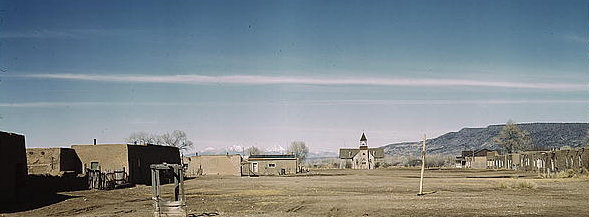
The 1850s saw a church built called San Miguel de Costilla. It would be several years before a priest was assigned to the area. As a result, the locals took matters into their own hands and the Penitente movement caught on some there. As a child, I recall some of the older men still practiced it.
Ultimately, a new church called the Sacred Heart Catholic Church was built about 1865 (first recorded baptisms). I remember attending mass there well. Today, It’s white stucco. I recall it also as a weird off pink. My parents were married there.
West of that is a graveyard that holds the remains of a few cousins.
Costilla was once part of Colorado. In 1861, The territory of Colorado established the original 13 counties. San Miguel was ordained the county seat for Costilla (Spanish for Rib) county. In recognition of this and with the acquiring of a post office, the locals decided to change the name of the town from San Miguel to Costilla. The following year, voters moved the county seat north to San Luis Colorado. In retrospect, this makes sense since the community was a little more central.
Then government surveyors who were laying out the state lines, realized small Costilla was actually in New Mexico. With a stroke of a pen, it became part of Taos County New Mexico.
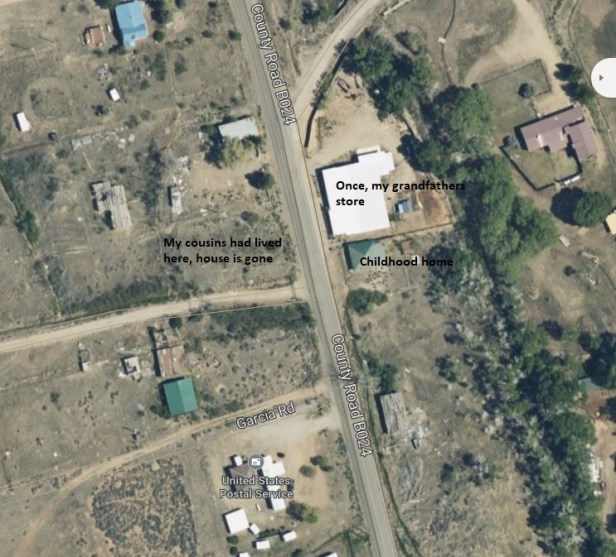
My grandfathers store and my cousins fill most of my memories of the town. My grandfather sold a little of everything in his store. He sold aftershave (for years after he closed, we got Hai Karate aftershave for Christmas). He sold nails and canned goods. There were racks of cloths and potato chips.
The store had a large propane heater. But to conserve fuel, it was heated by a large, square Ashley Stove in the center of the room. The old timers would sit around it and swap stories, talk politics, and how the “Bomb” was going to kill us all.
In the middle of all this, I was introduced to a taste sensation. Take an ice-cold glass bottle of Coke. Drink it down till it was about 2/3rds full and then pour peanuts in it. I tried it a few years ago with Coke in a plastic bottle. It seems to have lost something.
Many of the stories told bordered on the supernatural. One story I recall being told seems to have happened in the mid 50s. Locals described seeing a ball of fire leaping from peak to peak in the mountains east of town. What they saw is anyone’s guess.
Other stories were told of some of the old women in town. I barely recall them, and I don’t think I ever knew their names. But whispers surrounded them and the term “Curadera” was bandied about. Because doctors were so rare, many of these women were the source of medicines and cures. Using herbs and local roots and a lot of common-sense folk medicine, they healed the people around them. While they were treated with respect, they were also shunted aside. Some felt what they did bordered on Black Magic.
For a while, my grandfather had a sawmill in the area. I was very young the first and only time I ever went up there. I do recall a meal was fixed and we ate it late at night. It was fried chicken, mashed potatoes, and corn. Light was provided by kerosene lamps.
The sawmill was a serious operation. It was powered by a large radial engine that came from a B-24 that crashed in the area. What they did to obtain it, repair it, or where it went is totally unknown to me. I’m making an assumption that this is the B-24 referenced below for where the engine came from:


One of the things I always remember is how often my grandmother painted her kitchen. It wasn’t unusual to visit her one month, come back the next, and the kitchen would be a different color.
And that also reminds me of the day Grandpa blew up the kitchen.
Grandpa loved to cook. His favorite thing to cook? Pinto beans.
He used a pressure cooker to make them in. I make mine in a crockpot, but making beans in a crockpot is an all-day task. A pressure cooker shortens that down to an hour or so. Pressure cookers are still used today, but the first law concerning them still applies. Make sure they are in good repair, and the vents aren’t plugged. And God help you if they run out of water.
Grandpa was making beans. When he made beans, it seemed most anything he found in the cupboard went in them. Tomatoes, juices, meat. Making beans for him was a much an art form as cooking. The end results were always delicious.
He put the beans on the stove to cook and went into the living room. And instead of checking his cooking, he got into something on TV.
And then Boom! The lid exploded off the pressure cooker. Beans, tomatoes, and juices flew up in an explosion. It came raining down all over the kitchen, the walls, and the floor.
Thank God no one was in the kitchen when this happened. Pressure cookers explosions have been known to seriously injury people. At the least, someone would have been burnt by the incident.
I didn’t get to see the damage until a couple of weeks later.
By that time, the room had been cleaned and repainted. I remember looking up above the stove and I could see the imprint of beans on the drywall. I overheard that some of the beans had to be peeled out. I’ve often wondered how much force it took to embed a bean in drywall.
Today, Costilla remains a quiet town time has passed by. Many of the buildings I remember as a child have been bull dozed flat. This includes the house my cousins lived in and the pool hall next door.
What remains are a few homes, some abandoned structures, and a few crumbling walls. In orbital pictures, I do see a few “Newer homes” I don’t recall. So, the community still has some life in it.
Maybe that’s why the post office (at least a last check) was still open.
I haven’t been back there in over forty years. Maybe one day soon.
Resources:
https://en.wikipedia.org/wiki/Costilla,_New_Mexico

If you’re a Veteran in crisis or concerned about one, connect with our caring, qualified Veterans Crisis Line responders for confidential help. Many of them are Veterans themselves. This service is private, free, and available 24/7.
Here’s how you can connect with a Veterans Crisis Line responder, anytime day or night:
- Call 988 and select 1.
- Text 838255.
- Start a confidential chat.
- If you have hearing loss, call TTY: 800-799-4889.
If you’re not a veteran or wish you can also take these actions:
- Call 911.
- Go to the nearest emergency room.
- Go directly to your nearest VA medical center. It doesn’t matter what your discharge status is or if you’re enrolled in VA health care. if not a veteran, go to your nearest hospital.
Find your nearest VA medical center
Discover more from William R. Ablan, Police Mysteries
Subscribe to get the latest posts sent to your email.
 William R. Ablan, Police Mysteries
Having a pressure cooker explode would sure be a mess, Rich, and possibly harmful.
LikeLiked by 1 person
As a young cook, I was taught proper respect for them and that taught a little more than some healthy fear. I still have one, but I haven’t used it in years.
I actually learned a new way to make beans. Before, like my grandfather, I put everything in the pot and cooked it together. Today, I let the beans soak overnight, and then put them into the crockpot. The only thing I add is broth. I let it cook and at the end, then I add in my meat (already cooked), cooked veggies, spices, and so in.
I
LikeLiked by 1 person