


One of the many personal items almost every soldier took to the Gulf was a Walkman. For the kids that have never heard of one, these were small electronic boxes about the size of a small paperback book. You had headphones (actual wire) that you plugged into the Walkman. And you used cassette tapes to record music or lectures on and then playback so you could listen.
Some of the guys invested in external speakers. You plugged the speakers into the port for the headphones. That made it possible for more than one person to listen to the music.
We’d just pulled out of the parking lot near the sail work of art and somebody turned theirs on. It was playing Willie Nelson. In a land far from our home, Willie sang out “On the road again.”
The tiny speakers turned up full still made Willie seem distant. But Willie was reminding us that we were taking a major step towards going home.
We’d made it.
But as this leg of the journey would prove, we were still a long way from home. This wouldn’t end until our plane landed back in Germany, we were driven back to Ansbach and home.
Now we were heading west into Saudi Arabia along Highway 85. Long black scars crossed the desert from north to south. These were anti-tank ditches the Iraqis had dug. They’d been filled with crude oil. The idea was to form a flaming barrier that in theory our tanks wouldn’t be able to cross.
The tactic hadn’t worked at all.
They’d also torn gashes across the road, but those had been filled in by our engineers.
We’d been assured that the roads had been swept for mines and were clear. They’d ran mine sweepers up and down the road and the shoulders as well. These were tanks with rotating drums with chains. They’d drive down the road, the drum spinning and the chains would smack the ground. The idea was they’d detonate the mines.
Sheer chance, statistics, fate, whatever you want to call it, dictated that at least a few would be missed.
As we drove down the highway, we came up on a bus directly ahead of us. It looked almost like any other school bus in the world. But this one had been painted the sand color we used in the desert. It bore the inverted V of the coalition forces.
A placard in the window showed a British flag. It was our buddies from England no doubt doing what we were doing.
It started to signal to pull over. We slowed and moved over into the other lane to give it a wide berth. Several men got out. It was a simple bathroom break in the middle of the desert.
God knew, we’d done enough of those ourselves.
We slowed for purely safety reasons. Sometimes someone who wasn’t looking would step out in front of us. It would have been a shame to survive the war, then to die in a simple auto accident. Soldiers were milling around outside the bus. We continued to slow.
We weren’t much more than twenty yards away when an explosion echoed through the desert.
A cloud of smoke and dust rose up among the British troops. Several of them fell down or staggered backwards.
We knew right away what had happened. The Brits had pulled over and found an unexploded mine on the side of the road.
“Stop,” the LT ordered. “We need to help.”
Three members of our platoon had gone through a down and dirty combat medic course. I was still a registered EMT. And we had everything we needed to help since we had bandages and IVs.
We were most definitely in a position to help treat their wounded.
But as we started to pull over, a Brit NCO started yelling at us. “Stay on the the road,” he yelled. “Don’t get out! Keep going. Minefield!”
The LT shouted, “We have medics.”
“So do we,” he answered. “It’s too dangerous here! We’ll treat our own wounded.”
We all looked at each other. It was the right thing to do but did it ever go against our grain. We were just like any other first responder in the world. While everyone else runs from danger, we run into it.
Why?
Because that’s what Cops, EMTs and Firemen do. We’ve got it in our heads that we’re here to help our fellow human beings.
And all we could do was drive past. None of us had ever felt so completely helpless.
A few meters away, allies and fellow human beings were hurt. Maybe they were dying.
There was nothing we could do to help.
And worse, it was the right thing to do.
I’ve often had occasion to wonder what happened to these men. Did any of them die? How bad were they hurt?
But, thank God for a Brit who kept his cool in a bad situation and warned us off.
We might have added to the casualty list.
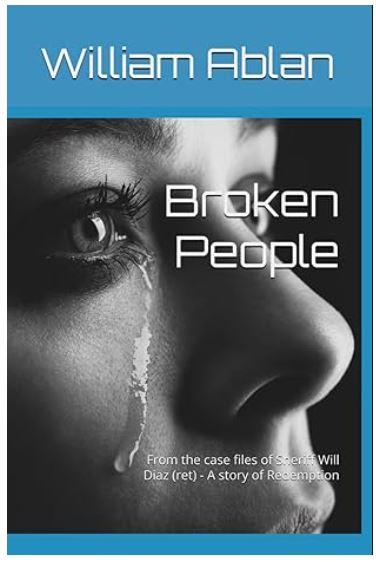
AUTHORS NOTE: Years later I’d fictionalize this event as an explanation of what happened to Pam’s husband. It’s part of the novel, Broken People.
All photographs Copyright – Richard L. Muniz

If you’re a Veteran in crisis or concerned about one, connect with our caring, qualified Veterans Crisis Line responders for confidential help. Many of them are Veterans themselves. This service is private, free, and available 24/7.
Here’s how you can connect with a Veterans Crisis Line responder, anytime day or night:
- Call 988 and select 1.
- Text 838255.
- Start a confidential chat.
- If you have hearing loss, call TTY: 800-799-4889.
If you’re not a veteran or wish you can also take these actions:
- Call 911.
- Go to the nearest emergency room.
- Go directly to your nearest VA medical center. It doesn’t matter what your discharge status is or if you’re enrolled in VA health care. if not a veteran, go to your nearest hospital.
Find your nearest VA medical center
Discover more from William R. Ablan, Police Mysteries
Subscribe to get the latest posts sent to your email.
 William R. Ablan, Police Mysteries
Heck of a detour. Thank you for your service and sharing it with the rest of us. Will be thinking of you on Memorial Day as well as Veterans Day.
LikeLike
Thank you!
LikeLiked by 1 person
Very welcome. 🇺🇸🇺🇸🇺🇸
LikeLike
Yes, land mines can be a big problem. It’s good you didn’t hit one. Our engineers would use dogs, as well as the mine sweepers. The dogs would sniff out mines that the sweepers wouldn’t pick up. Eventually we would thunder run, to cut down the time spent.
LikeLike
The frustrating part was we couldn’t do anything! it still bugs me.
LikeLiked by 1 person