

Over the course of the last several weeks, we’d been getting ready. There were two things that signaled we were close.
1: We got ammunition. One of the many Jobs of the Military Police is to secure the rear area. In short, we’re the security element that would be expected to go toe to toe with enemy special operations teams.
MPs are extremely well armed to preform that mission. The typical MP team is extremely mobile. The HUMVEE provided for some protection and can get us from point A to B quickly.
We were armed as follows:
Team Leader – M203: This is an M-16 with a grenade launcher attached. A serious weapon and a lot of fun to shoot.
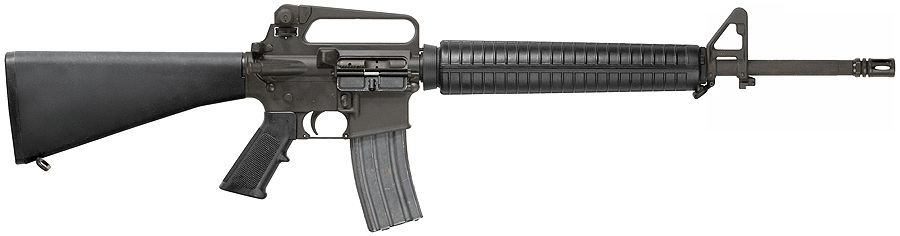
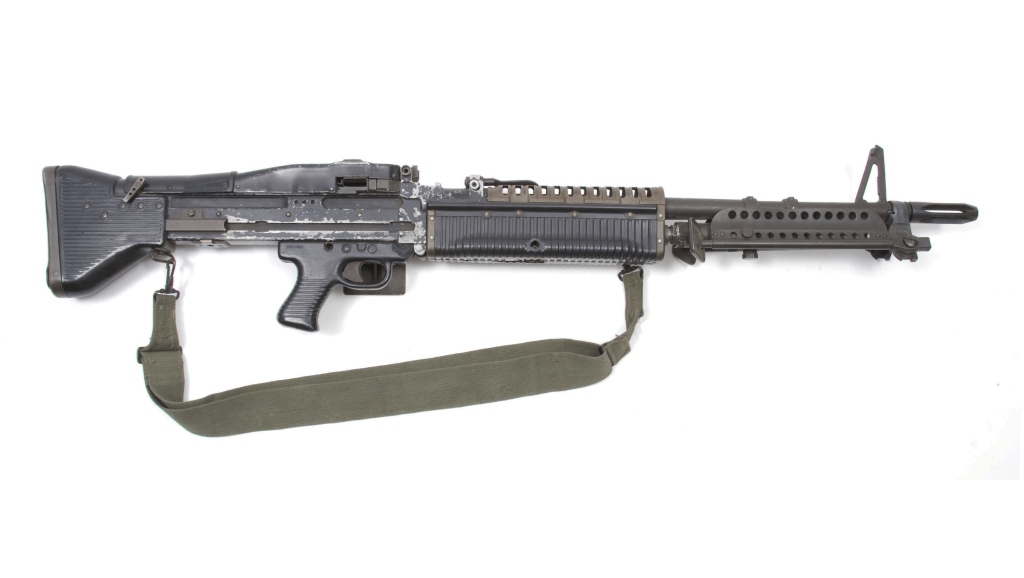
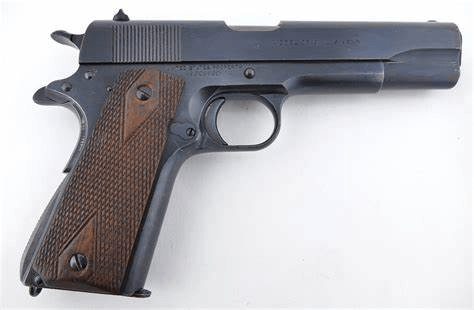
In addition to these weapons, we each carried our sidearm. While some units used 9mms, we still used the old Colt 1911 chambered in .45 ACP. To this day, the 1911 is my weapon of choice. I still carry it in my protective services at my church.
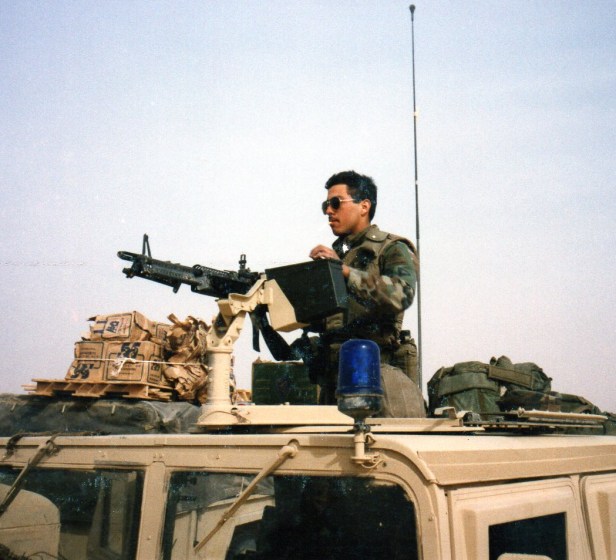
And we didn’t have just a little ammo.
We got a boatload per team. We’re talking thousands of rounds for the M-60 and the M-16s. Hundreds of rounds for the 45s. Grenades for the M-203s. Claymore mines. Hand Grenades. AT-4’s. Smoke bombs.
My father asked how well armed we were and I told him this. With what we had, we would have held the Alamo. Then we’d have taken the battle to and defeated Santa Anna without even trying.
2: We began the process of armoring the HUMVEE’s. The vehicles had some protection, mostly a spray on of some kind of armor. We had little faith in it. That said, I did see a HUMVEE belong to a cav unit that had been hit by small weapons fire. There wasn’t a single penetration.
That said, the big fear was hitting a land mine. There was almost nothing between us and it except for a thin piece of steel. The solution was one employed by soldiers for over a hundred years.
The Sandbag.
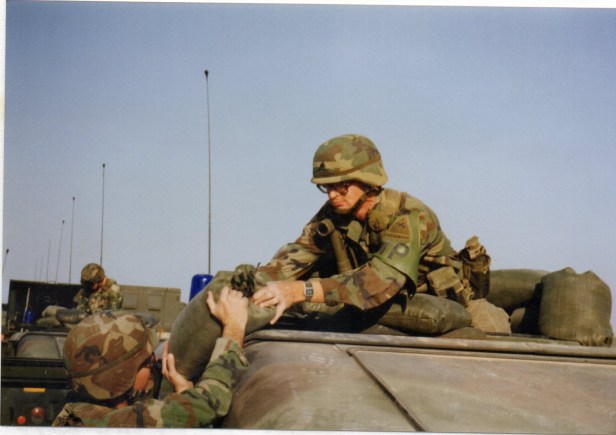
Sandbags were filled and put along the floor in front of where we were sitting. Sandbags were also placed behind us on the floor. More sand bags were filled and placed around the Gunner’s turret to give him or her a little protection.
The HUMVEEs were tight to begin with. They were worse now. I spent a lot of time eating my knees.
But in at least one case, a crew would be thankful for the added protection.
***
January 17th, 1991, I had the night watch. Normally, it was nothing much more demanding than sit in the command tent, drink coffee, and answer the radio if someone called.
But tonight wasn’t a normal night. There were several of us in there. I recall one of the privates commented there seemed to be a lot more jets overhead.
I’d expected that. The date the UN Security Council gave Saddam to get out of Kuwait had come and gone. As if to confirm that, a message came over the radio. In a nutshell it announced that we’d begun a series of deep air strikes into Iraq. Local military commanders were to assume a defensive posture.
The air war was on.
“Go wake up the captain,” I told a private. “Tell him it’s started.”
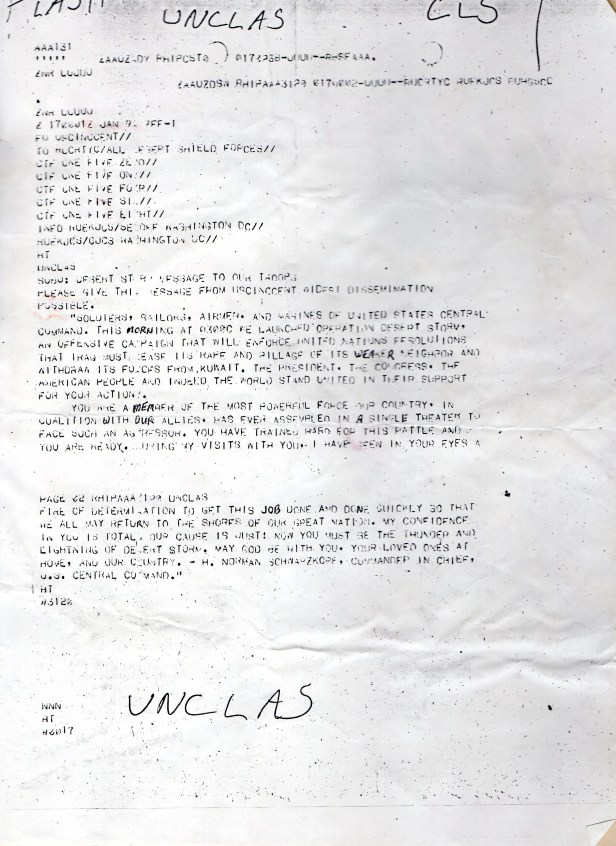
Our immediate concern was a counterattack from Iraqi forces. We’d been slowly getting stronger and stronger. Each passing day brought more troops and equipment.
So with our strength up, and loaded for bear, it reasoned that Saddam might try to even the odds. Most likely that would be with a gas attack delivered by his missiles or aircraft. We went into the trenches wearing our protective masks and in MOPP (Mission Oriented Protective Posture) Gear.
The term MOPP has five levels. And it explains how we’re dressed for a potential threat. They are:
MOPP ZERO– No immediate threat. That said, we know it could happen and we’ve got our gear handy and ready to get into.
MOPP ONE – There’s a good possibility of an attack. In this we’ve put on the charcoal lined protective clothing over out regular clothes. Everything else is close by.
MOPP TWO – We’ve taken it up a notch and put on the overboots
MOPP THREE – We’ve got everything except the glove. But they are handy and can be put in at a moments notice.
MOPP FOUR – Fully suited and you’re most likely in a chemical environment.
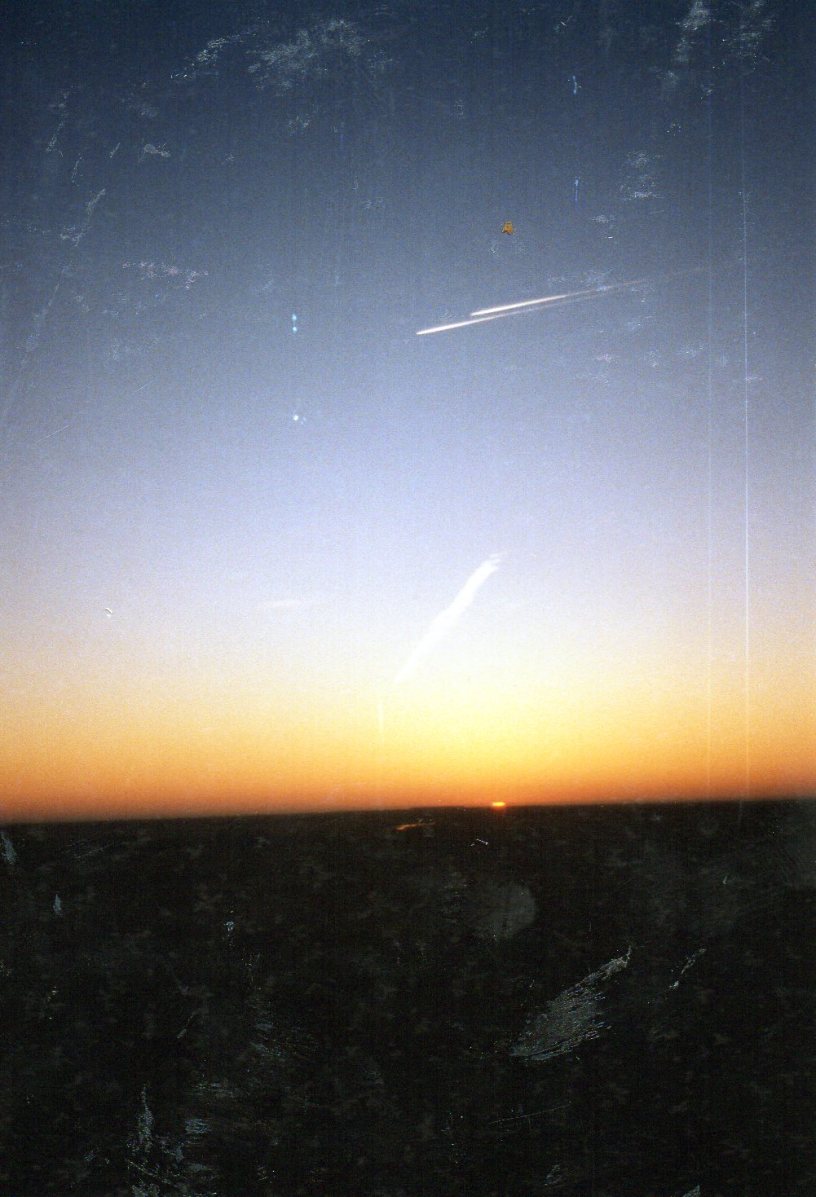
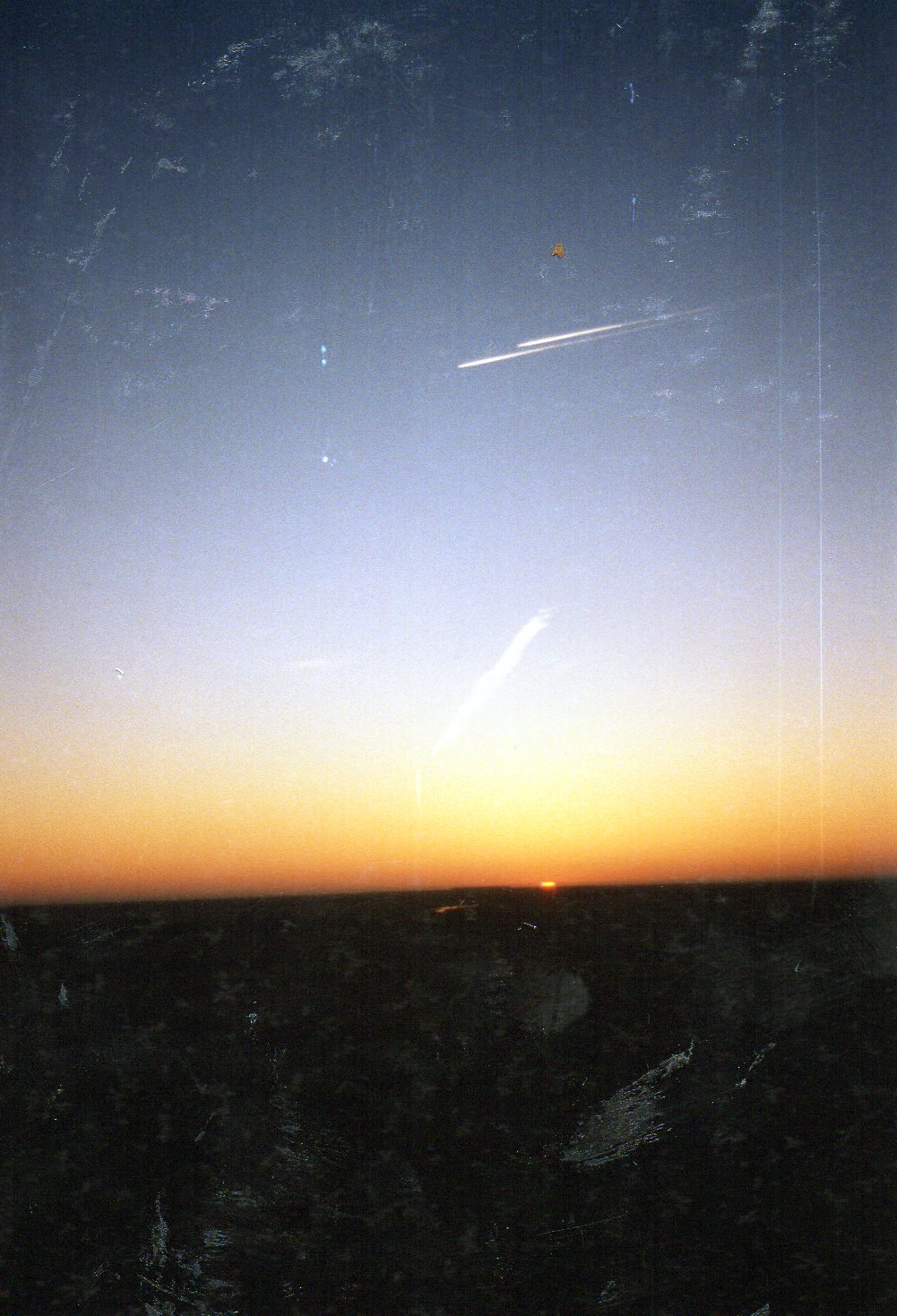
As the sun was rising, I heard thunder in the skies. A strike was heading in, and I caught jet contrails up high.
We came out of the trenches about 8 AM, but stayed close. No one seemed to know what was going to happen next. Would Saddam fold? Would he come south?
No one knew. We got out of our MOPP gear, and went about our day. Everyone kept looking north as if they expected something terrible to materialize in the distance.
But nothing ever did.
At least to us.
Saddam did toss a handful of old Scuds at installations in Saudi cities. But about all that managed to do was create some nice fireworks shows. Our patriot missiles made short work of them.
But a girl I knew told me of a close call. She and an officer had gone to this one installation. They’d just left it when the Iraqis tried to send a missile down south. The patriots intercepted it all right, but the warhead fell on the installation she’d just left. Several soldiers were killed and injured by the warhead.
It was a close call for her.
Previous- Eagle down. Next –
All photographs Copyright – Richard L. Muniz (Except the M-203, M-16, M-60, and 45 pictures).
Discover more from William R. Ablan, Police Mysteries
Subscribe to get the latest posts sent to your email.
 William R. Ablan, Police Mysteries
Fantastic, William! It’s good you had the patriot missiles defense. It seems the M-60 gunners could have a shield on the mount.
LikeLiked by 1 person
The new one do. Back then, not so much. Today, the turret is pretty much just that. If we’d had access to steel and welder, I think we’d have engineered something up. Sandbags was the best we could do.
LikeLiked by 1 person
I get it. I was just thinking of our 50 gunners on our APCs.
LikeLiked by 1 person