

I was speaking with my Pastor recently. I don’t know if I ever mentioned him, but his name is Alan Kraft and he’s the Senior Pastor here at Christ Community Church, Greeley, Colorado. He’s a really nice guy. Insightful. Thoughtful. Smart as a whip.
Anyway, one of the things we have in common is we’re both writers. I write what I call “Autobiographical Fiction.” That means there’s some truth to most of the stories, but I’ll never admit it.

He writes on more spiritual topics like the Holy Spirit, Salvation, and so on. His latest book is “The Intimate God” and it comes highly recommended if you wish to have a better relationship with God.
We were at Freddies, a hamburger stand if you’re not familiar with the place. Since I run the Church Security team and consider myself his personal bodyguard, it’s important we sit once in a while and talk.
The subject of editing came up and he asked how I do it.
Well, I read, and I read it till I’m blue in the face. Then I put it away for a while and then come back to it. Then I catch more mistakes.
Then I run it through a couple of different editors to include Grammarly, AutoCrit, and the built in Word editor.
We both agreed one of the worst things that happens is our brains are wired to automatically edit a mistake.
Here’s an example.
One of my more often made mistakes is typing in “out” when I meant “our.” Since I know this, and I also know any spell check software might not catch it, I’ve something I do. I have a list of common mistakes I make, (like that one) and I do a search for all instances of “out.” I read the sentence and make sure I didn’t mean “our.”
But when I’m reading it, my brain will automatically edit it for me, and I may not even notice the error.
Interestingly, I almost never get it the other way around. What I mean by that is it’s rare I type “our” when I mean “out.” Guess there’s a short circuit between the brain and fingers someplace.
Then, I print it off and read it to my wife. This comes in useful because I have to concentrate on every word, and I’ll catch things I never did before. Mostly, what I catch are sentences that don’t sound just right. Of worse, a sentence that runs on, and on, and on, and . . . Well, you get the picture. What happens here is that I end up using three or more words when one will do. Of course, then you have to find the one word to use.
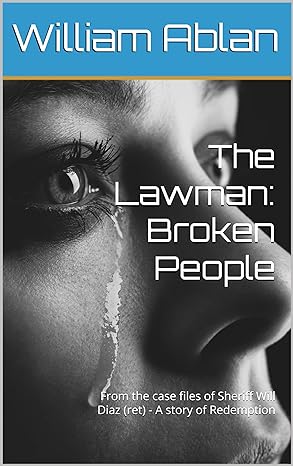
One of the last things I look at is “Does it belong?” This becomes very true when I’m whittling down the novel. For instance, Broken People, before I started taking the razor to it, came in at a whooping 367 pages.
There were a lot of little things that got cut. An example is a scene at a rodeo where they encounter a fortune teller. Is it interesting? Yes. Is it dramatic? Yes. Did it add to the story? Not really. It was just an interesting aside. It distracted from the main event, and that was Pam freaking about because of the noise and crowds. So, there it went onto to cutting room floor.
Did I really need to have three pages on the Geology of the San Luis Valley. While hard science is one of my passions (and by default, one of my central character’s passions), we didn’t need a Master level discourse on the subject. That got cut down to a handful of paragraphs.
Then there’s words that end with “ly.” These are called “Adverbs” (See Mr. Morgan, I did pay attention in English class once in a while). Word has it that Ernest Hemingway hated them and tried not to use them (I could have said “Used them sparingly – Get it” But I wanted the ghost of Hemingway to be happy). You’d be surprised how many words you can cut by paying attention to his advice. Cuttings words will lead to cutting pages if you cut enough.
There are a couple of things that ended up belonging in the book. In the rewrite of book one, the Cross and the Badge, I started a couple of story arcs that won’t be completed for a while.
One involved a rescue mission RJ found himself on. An old hunter, dying of stage four cancer, is on his last hunting trip. When an unexpected snowstorm buries the mountains, he can’t make it out on his own.
Intending to come back to get him, the sons hike out, but can’t get back due to the snowfall. After several aborted attempts because of the weather, RJ leads a rescue team in, only to find he’s gone.
The assumption is made he panicked and tried to get out on his own, only to die in the storm. And that’s the story up to point hikers find remains scattered over several hundred yards. The skull is found, and there’s a bullet hole behind the left ear.
I have these story arcs because the books take place over a period of years. Since some cases happen over a period of months, if not years, I wanted to show that.
I also have a story arc with what, up to now, have been minor characters. That’s about to change big time in the future.
All of that demands good notes to keep things straight.
But no matter how much you try, you will still find mistakes. Pastor told me of one where he opened one of his freshly published books. He’d proofed it to death. His wife had proofed it to death. It had been scrubbed by Grammarly and Word several times. Beta readers scoured each word, not to mention professional proofreaders poured over it.
And after all that, he opens to page one and what’s right in the middle of the page.
A typo!
Makes me wonder how many mistakes Da Vinci made with the Mona Lisa?
Discover more from William R. Ablan, Police Mysteries
Subscribe to get the latest posts sent to your email.
 William R. Ablan, Police Mysteries
For me it’s taking another look at all weak verbs beginning with “was” or “were.” I’m so thankful that a beta reader pointed it out to me.
BTW, Broken People is your best yet! You’ve gathered such a rich cast of compelling characters around your brave and humble Will Ablan.
LikeLike
That’s one I never considered. Will keep an eye on it in the future. And Oh, Thanks for that catch. It’s fixed.
LikeLiked by 1 person