

It’s been thirty years since I last read this book. I’d “acquired” the book from my father, and it had bounced around the world with me. The copy was tattered, kept together with tape, and didn’t make it back from Germany.

So when the kids gave me an Amazon gift card for my birthday, I decided to replace some of the books lost along the way. And I found a used copy of the very book I’d carted around the world. This is the one that has a very dramatic picture of a P-40 in Flying Tigers paint being shot down by a Japanese Zero.
I bought it, and I’m pretty sure I’m the first person to have read that copy.
Let me start by saying that this has always been one of my favorite books. Saburu Sakai is someone I’d have gone out of my way to meet.
Thirty years makes a huge difference in reading a book. Part of it is I’m now looking at it through the eyes of a writer. Every sentence and word gets digested, and I’ve read things I didn’t recall before. An example was the Betty bomber pilot who told Sakai and other pilots he’d always wanted to try a loop. That’s a task that would almost be impossible in a large plane. But hit, and on fire, the pilot tried it and very nearly pulled it off (the airplane exploded before he could finish the loop). Or the P-39 Airacobra pilot who got into an a dogfight with Sakai. By his own admission, Sakai says the pilot was superb and if his airplane had been just a little better, it might have been Sakai who went down in flames.
Of course being wounded in a dog fight over Guadalcanal, and fighting his way home with a bullet in his head, and half blinded is gripping. It’s considered one of the greatest single feats in combat aviation. How it happened is dramatized in the History Channel’s, Battle 360. Many of those videos are on You-Tube and are worth a look.
His recovery from his wounds is at once painful to read about, and heartbreaking. Equally heartbreaking is the confusion shown by the Japanese people. They’re being told of one victory after another, but a look at a map can tell them the war is coming closer to home. It’s as if the common people knew something was wrong, but just didn’t have information to figure it all out.
And finally, here he is, a fighter pilot with one eye, some loss of mobility, being sent back to fight in the cockpit of a Zero. But in the time it took him to recover, the war had changed. When it started, the Zero was the plane to beat. It could out fly anything tossed at it. Even the much vaunted Spitfire, the plane that had helped beat the Germans at the Battle of Britain, was child’s play against the Zero.
But things had changed and not for the better.
Many of the high quality pilots Japan had started the war with were now dead. Second string pilots were tasked with flying an airplane that was now outclassed by most everything in the sky.
And Sakai is a damaged war machine in a war he might not live through.
Sakai relates a great example of this. He got in a dogfight, got a little separated from his squadron, and when he finally saw them, went to join up. Only with one eye, it wasn’t until he was almost on top of them, did he realize they were American Hellcats. What he relates is a wild dog fight with over a dozen fighters after him. Sakai was one heck of a fighter pilot, but he said the only thing that saved him was the Americans wanted him too badly. If one of them would have slowed down and thought things through just a little, they’d have got him.
The book is an incredible read, but it’s far from perfect. It seems that first, the book was never printed in Japan. The other is that Martin Caidan, the man who took Sakai’s memories and put them on paper, has been accused of fictionalizing some of it, or taken events that happened to others and putting them into the book. Even the cover, dramatic as it is, might be incorrect. I don’t recall Sakai mentioning flying against the Tigers.
One thing that is clear is he flew the last combat mission against Americans by Japan. He and several others went up against a couple of recon bombers which he misidentified as B-29s (they were B-32s). I’ve included a link here because it’s a fascinating read.
According to his account, they shot one of the planes down. Records disagree, stating that both planes returned to base.
A little side note here, but one of the Zero fighters he flew still exists in the Australian War Museum.
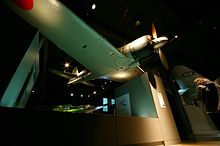
Despite the stones you can toss at the book, it’s an amazing read. It gives a perspective on World War II from the other side. It’s also thrilling and gives a great windows into the heart and soul of a great fighter pilot.
Discover more from William R. Ablan, Police Mysteries
Subscribe to get the latest posts sent to your email.
 William R. Ablan, Police Mysteries
Your post gives me ideas for writing some historical fiction.
Probably won’t; I rarely do. But the ideas won’t let me go… since reading here.
LikeLiked by 1 person
That’s why I write. I have to.
LikeLiked by 1 person
I never really thought about writing from the enemy’s point of view. I am familiar with some great historic battles in Israel, and your book cracked open that insight giving my racing mind all manner of chaw to chew on.
I have wondered some … Simon bar Giora. Not the most famous “messiah” of history by any stretch, but I often wonder what was his revolution message to the young men and boys of “fightin’ age” that they felt compelled to stand their ground against Titus at the Fall of Jerusalem?
I have no historical insight into that. But as I look at the Old Testament, I think of Sennacherib visiting his armies on Jerusalem generations before when Hezekiah was king. Isaiah and Hezekiah get a message from God to stand firm. God is going to fight for them. He does. Sennacherib goes home with his tail between his legs despite coming to the fight with a superior firepower. The Jews have no ground for pride in this fight, but they can be thankful for the gift of victory. Turns out it was a matter of sheer FAITH. Almost blind faith.
I imagine bar Giora has that passage on the tip of his tongue. So many generations later, he can say that YHWH will defend his house. Meanwhile, he is looking for a few good men.
Those few good men utterly die.
But they stood their ground.
LikeLiked by 2 people
Interesting. I not that familiar with the history of Israel as recorded outside the Bible. I knew about the fall of Jersulalum and Masada, and etc, but not the big details or names involved.
Maybe I need to set down and do some reading. don’t know if you’ve caught the TV show, Unearthed. they did a thing on the Dead Sea Scrolls and etc, and they covered a piece of this. I thought it was fascinating.
LikeLiked by 1 person
I fear I sound like some great know-it-all jerk with this stuff. Far from it. But I have studied especially the Gospel of Mark with such rigor for many years that I pick up stuff.
I wrote my own … well, I call it a layman’s commentary.. . on Mark. It is the shortest gospel of the four in the canon. It is believed to have been the first one written (not be everyone, but by plenty, and by me too).
We cannot date it with precision, but it appears it was written very close to the fall of Jerusalem. Possibly just before, possibly just after.
I think that little piece of information as a starting point begins laying out important clues about how to understand it and so forth. It is the shortest and most spartan with info of the rest. It has one of the most disputed textual passages of the whole Bible (the last twelve verses). Stuff like that.
So if you read about the battle for the city and learn what was happening at the time Mark felt compelled to write a written account of what the church up until that time was happy to keep as an oral tradition (the first roughly 35 years of the church), “found appreciation is just laying all over the field of battle.
My personal theory, and keep in mind, I am a novice, well studied on this one topic, but still a novice, is that Mark wrote a “revolutionary rag” of sorts. It is quite troubling, actually (if you read it without the last few verses). BUT, if Mark was recruiting disciples to Jesus – away from the doomed temple – then he was going head to head with bar Giora (and others) who were seeking recruits.
And so… one of the first things you begin to notice right in chapter 1… Jesus comes along the sea shore announcing Repent! The Rule of God is at hand! And we find the young men/boys of fightin’ age dropping their nets and leaving their fathers in the boats to run off and follow Jesus.
THIS sounds very much LIKE the boys in the colonies who trained to fight the British. They might carry a loaded musket along with their lunch pale to the mill or to the field to plow every morning, but when the bell rang, they would drop their work and take off running to fall into formations and start drills. The Americans were so fast at this, we call them Minute Men.
I believe the first “disciples” to follow Jesus saw him as a rebel. (Certainly Rome crucified him as such, so they saw him that way too.) I do not believe Jesus was anything like a typical rebel, but he had enough in common with rebels to be confused with them, and even his own disciples, especially early on, did not have that worked out yet.
I think Mark wrote a pamphlet to recruit young men.
When I was a young man growing up in Montezuma County Colorado, I always heard rumors of militias in the Mancos Valley or running around up at Haycamp Mesa. I never saw them. I never knew anyone who claimed to be involved. But I heard a strange bit about Walmart, when they came to town, and that every Thursday morning a truck would arrive from the distribution plant in Plainview, Texas with a new shipment of ammo. Word had it, by Friday night, the store was sold out again, and this was a weekly thing.
I was in no position to confirm such a strange rumor, and I didn’t really believe it, BUT I had connections to this part of Texas, where I live now, and I knew that part about the distribution plant could be exactly right. But still, I didn’t just go believing every little conspiracy theory I ever heard.
But then one year when I was about 20, I was working for my friends at the mom -n- pop record store downtown, and I opened the store early that day. Our store was right next door to the pawn shop, which had not opened yet. It was just me in the store, tidying up mostly as it was a very slow hour for business.
A mountain man walked in I had never seen before. He looked out of place in our shop, but I quickly figured he was waiting for the pawn shop to open and just thought he would browse ours while he waited. That is exactly, I think, what he was doing, however, he must have seen me and thought I might be a prospect. I was a young man of about fightin’ age alright.
After circulating the place a few times and it was just the two of us alone in there, he finally approached the counter and slid a pamphlet across it to me. I opened it up and saw all manner of pictures of Hitler, Schwastikas and guns etc. It was pretty short. Held together, I think, with a couple of staples in the spine, but I thumbed through it…
I don’t remember now what all it said, but I am sure it didn’t mince words. This little booklet put me on the stop sorta in the tradition of the old UNCLE SAM WANTS YOU posters at the post office. Only, I was put on a real guilt trip.
I was told I OWE it to myself, my neighbors, and my country to arm myself, and defend myself. If I did not, I was asking for it.
That sort of thing.
I was stunned. I was taken off guard. I wish to God now that I would have found some way to keep that thing, but I doubt very strongly he would have let me keep it without making a commitment to join his club. But if I had it today, I could use it as a very real artifact demonstrating the KIND of thing Mark was setting out to do – or actually to counter.
I believe Mark went into Jerusalem either right before or right after the war with Titus when the temple fell. I believe he recruited young men TO JESUS rather than to bar Giora (and others – Giora was not the only messianic wannabe by a long shot, but his capture and execution is so interesting and parallels Jesus in some intriguing ways that he is an easy target for historians to prop up as an example…)
By the way, just a couple of years after I moved away from Montezuma County, there was an officer who pulled over a truck at the edge of town (I bet you know this story better than I do) and as he was on the radio, two men jumped out and blasted him to Kingdom Come with automatic assault rifles. Back up came and gave chase THROUGH town and they had a wild west shoot out of a modern day.
The outlaws managed to get away into the high deserts of Utah, Colorado and disappear. But the thing made Peter Jennings news for a week or more as law enforcement from across the nation descended on my home town to join the hunt.
All of this gave a LOT more credence to the rumors I grew up hearing. It also let me see more clearly what I was looking at in that pamphlet on the counter in that little store that day. And it all helps me to read Mark with the kind of battle field lenses not terrribly unlike the book you posted about. But that enemy angle is a new idea for me.
LikeLiked by 1 person