

When I first published Broken People, I included a preface on veteran’s suicide. The new cover is probably going to cause me a lot of trouble. But if it even shocked one person to get the help they need and saves their life, then it was worth it.
Suicide is something that hasn’t gone away, and probably never will. If anything, it’s going to get worse before it gets better.
But since I cleaned it up and I’m getting ready to repost it with the new cover art, I wanted to look at things one more time.
First, what is suicide. Here’s the definition.
sui·cide
- the action of killing oneself intentionally.
Now, why do people do it?
There’s a lot of factors that can influence a person to commit suicide, including child abuse, bullying, or sexual violence. We see this a lot in teenagers.
Military members have all that to include the stressors added to them in war.
Here’s a list of potential stressors that can contribute to suicide:
- Mental disorders–Now, before someone laughs and says “yeah, you’d have to be crazy,” let me remind you of this. We know people who have severe trauma in their lives, and they’re trying to deal with it. It generates a little PTSD. Depression is commonplace. Thoreau said people live lives of quiet desperation. Sometimes the desperation gets to them.
- Addictions to alcohol or other drugs–it’s a well-known fact that abuse of any kind opens doors, and we talk ourselves into things that may or may not exist. It brings the threshold down that much more.
- A serious physical illness–I’ve seen these play out a few times. Why live with something that’s going to kill you, anyway? While that might seem logical, family members are often devastated beyond belief when it happens.
- A major loss–we’re talking the death of something. More often than not, it’s over someone you were in a relationship with. But people have killed themselves over losing a job.
- Serious legal and financial problems–people just can’t bear up under the weight. And when you have few options, it might start looking attractive.
- A history of Truma or abuse.
- With that, let’s look at some numbers–In 2022, 6407 veterans committed suicide. 41,484 non-vets killed themselves. While the rate among veterans sounds lower, the reverse is true. There are simply more non-veterans than veterans, and if you look at it as population groups, we see the rate of suicide among veterans is 34.7 per 100,000 while non- veterans is half that.
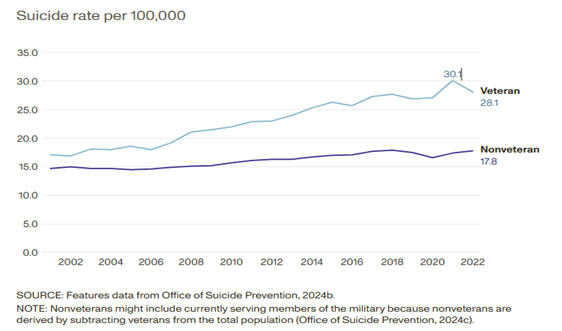
- Suicide rates remain highest among vets ages 18-34, although most veterans who die my suicide are ages 55 or older.
Here’s a few things to watch for if you’re concerned with someone committing suicide:
- Increased withdrawal–They avoid social gatherings, cancel plans, or lose interest in what’s going on around them.
- Changes in mood–Rapid mood swings from extreme highs to lows with no apparent trigger.
- Feelings of worthlessness-Expressing feeling of being a burden or that the world would be better off without you.
- Despair–Openly discussing (or not) unbearable pain or hopelessness.
- Making plans–getting affairs in order and taking steps to make them happen.
- Increased drinking or drug use.
A common myth is that if someone threatens to kill themselves, they don’t mean it. That they’re just trying to get attention.
Take it seriously.
Get them some help.
Here’s a few resources:
Here’s how you can connect with a Veterans Crisis Line responder, anytime day or night:
- Call 988 and select 1.
- Text 838255.
- Start a confidential chat.
- If you have hearing loss, call TTY: 800-799-4889.
If you’re not a veteran or just need fast help, you can also take these actions:
- Call 911. A lot of first responders now have mental health experts embedded with them.
- Go to the nearest emergency room.
- Go directly to your nearest VA Medical Center. It doesn’t matter what your discharge status is or if you’re enrolled in VA health care. If not a veteran, go to your nearest hospital.
Discover more from William R. Ablan, Police Mysteries
Subscribe to get the latest posts sent to your email.
 William R. Ablan, Police Mysteries
Great information that could be helpful, William.
LikeLike
How much trouble do you think I’ll get into for the new cover
LikeLiked by 1 person
People have different taste, but I don’t anticipate any real trouble.
LikeLike