
In the first part this, I told a story that had been handed down word of mouth from my father. He’d heard the story from his father and from his grandfather.
I wanted to verify the story because it sounds like something from a Zane Grey novel.
I also wondered how much the story changed with the telling. I know there’s a good chance the elements changed while being passed from generation to generation.
Then there’s the person telling the story. I can see my great grandfather, a wizened old grandpa, sitting in a rocking chair. He’s rolling a smoke and telling one whopper of a story to wide eyed grandchildren. Of course he wants to sound at his best. How much did he embellish it?
And where do you start trying to prove or disprove something like this? The principals in the story have been dust for over a hundred years. Since I don’t believe in seances, a crystal ball is out of the question to check the facts.
But I’ve always been good at research. And if I don’t know, I ask. Doing that meant getting into one of the Genealogy groups on Facebook. I posted a link and before long, I’d gotten some answers.
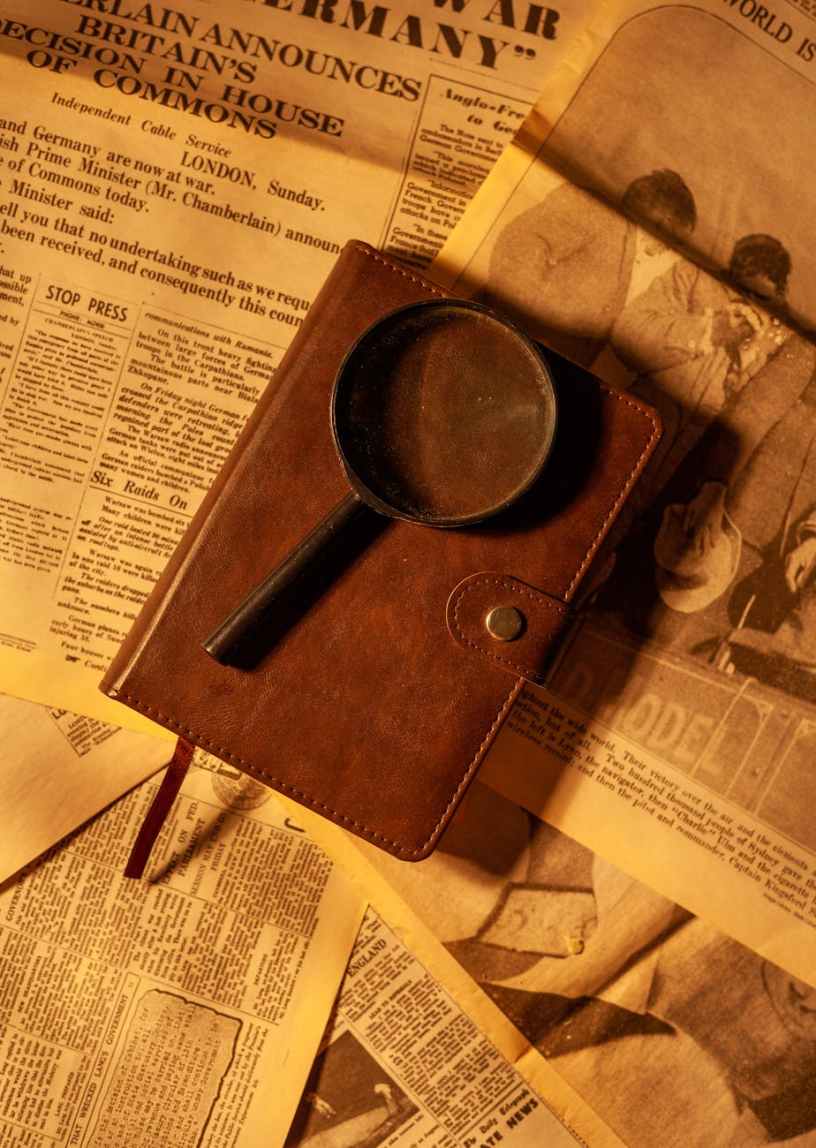
A lady name Tina Brantley found an old article in the Aspen Times dated July 21, 1887. She passed it on to me.
The article confirms the story. To a point. There are some really notable differences between how I heard it and how the newspapers reported it. I expected that.
But what I find interesting is the things that didn’t get passed down. There’s a man mentioned in the article named McCook. He’s identified as a member of the Ute Tribe. He’s the one who came by the cabin with the warning for Muniz.
The verbal story also didn’t say McCook stayed with my ancestor.
McCook is a rather interesting name. The tribes were adopting Spanish or English names, and McCook certainly fits into that idea.
A Google search says it’s Gaelic in origin, and it’s very possible this man’s father was a white man. That or he was a white man who had become part of the tribe.
The article mentioned my ancestor had friends who worked the claim with him. The article seems clear they weren’t there that night, nor does it ID who they were. What it does state is that a few days after the shooting, several Ute warriors came to the cabin. They were of course, looking for my Great-Grandfather. After a confrontation, one of the men went with them. The warriors promised they’d turn him over to the Agency for trial.
He was never heard from again and the paper opines that he was killed. Interestingly, it didn’t mention a name so I can’t validate the story. For all I know, the whole story was made up.
The way I got the story made it sound like my ancestor was by himself. The article, based on information given by my ancestor to Sheriff Brandish disputes that.
So, what did happen?
The article is the closest thing we have to an eyewitness account of what occurred. But it’s one sided and is based on what my ancestor told the Sheriff.
First, a big error in how the family story was told.
The story came to me that the claim was near Cripple Creek which is long ways from Grand Junction.
The article in the Meeker Herald says the area is the Lower White, which is near Meeker, Colorado. I’m assuming this is the White River that runs from above Meeker into the Colorado near Glenwood Springs.
There’s still the question why Muniz went to Grand Junction to surrender himself rather then Glenwood Springs or Meeker.
The July 23, 1887 edition of the Meeker Herald seems to shed some light on the subject. A delegation of Utes came by to confirm that Muniz had been arrested. Perhaps Muniz felt Meeker was too small to afford him much protection. The writer of the story mentioned that if the Utes got their hands on him, he probably wouldn’t last long. My Great-Grandfather probably felt he’d be better protected in Grand Junction.
The Herald confirmed to the delegation that he had been arrested and he was in jail in Grand Junction.
But the entire story is weird and reflects the views of the time. The writer seemed more interested in
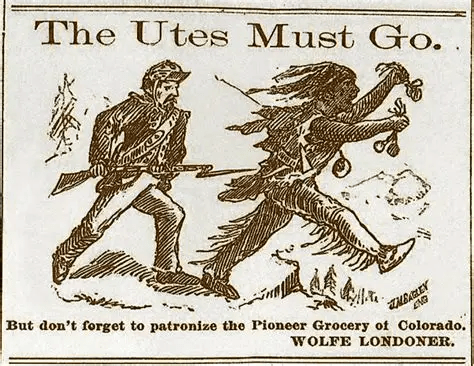
letting his prejudices show rather than telling a clear and objective story. He needed to fill in a column, and a simple question and answer story wouldn’t have been enough. The story was mostly about running the Utes down and saying what he thought of the women in the delegation.
And we complain about the press today!
A couple of things I caught from the story however. McCook, the Native American identified as having warned my Great Grandfather was part of the delegation. The Utes said they would send a delegation to Grand Junction, but went away satisfied.
I find nothing that says they ever did send a delegation.
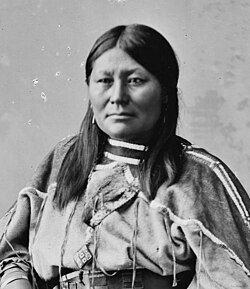
Then I found the initial story reporting the shooting, and it was in the Meeker Herald, July 2nd edition. The article called Augustine, the Native American who was killed as a massive trouble maker. He was well known to the settlers and Native Americans in the area as someone to be on guard against. The story stated that the Utes had come in to see Sheriff Kendall and request he apprehend Muniz. What Sheriff Kendall did is unknown.
Finding the articles in the Meeker Herald and the Aspen Times pretty much dried up as a source of information. Muniz vanishes as far as they’re concerned.
So, I turned to Grand Junction to try find to out what happened next.
And that’s where what happened next goes cold. None of the Grand Junction papers seem to be on line like the old Meeker (and many other) papers are. Why, I don’t know. It’s possible they’ve been lost to history, but I don’t know yet. It’s my hope they’re in some archive someplace.
What happened next is open to speculation.
Did Muniz face any kind of legal proceedings?
Or is it as he claimed, that the Sheriff (J.O. Brandish) just put him on a train and told him not to come back?
And if so, why?
There might be some truth that he was put on a train and warned not to come back. But understand this is a supposition on my part. In the following months there were some major issues between the Utes and the white settlers in the area. It involved bringing in the Army to get things back in control. Before it was all over, 3 settlers and 8 Native Americans had been killed. It would be the last major Native American uprising in Colorado.
It’s very possible that during all this, he fell through the cracks with all the problems the area was experiencing. That or his presence in Grand Junction made him a sort of Jonah. The locals might have thought he was an excuse for the Utes to come looking and causing problems. So, they simply ran him off.
It’s also possible that since there were no real eyewitnesses to the event, the matter was dropped. Early reports show that only my great-grandfather and McCook were at the cabin when the fight occurred. If there were others, the paper is mute on it. The paper says McCook didn’t see anything because he was to busy getting out of there.
As a result we have only the statement of Augustine Muniz that it was self defense.
He stated he exited through the back door like McCook had. But while McCook ran for the creek, Muniz went around the cabin to confront their attacker.
According to the paper, Muniz told the Sheriff that when he first fired at Augustine, nothing happened. I’m not sure what “Nothing” means. My guess is he made a rather rookie mistake when it comes to gunfighting. Since he had a rifle, he’d probably failed to chamber a round into it.
It’s also curious that Augustine didn’t return fire. Two possibilities come to mind. Either he didn’t hear Muniz or was busy reloading.
But when he fired the second time, Muniz didn’t make a head shot but rather shot Augustine in the chest.
Muniz then saddled up and rode for Grand Junction.
There’s no evidence the crime scene was even looked at, so we can’t turn to it to confirm or deny the story.
What we end up with a third hand account of a story of self-defense. And if McCook was one of the Native Americans killed during the skirmishes, his testimony would have been gone.
Without a crime scene, testimony, and better evidence, we end up with a big question mark as to what really happened. It might simply have been kicked out despite a dead man and someone owning up to it.
One thing that troubles me is the attitude of the times. I know it’s not fair or right to judge the past by where we are today. But I can’t help but wonder if the matter was just blown off. The thinking might have been “It’s just one more Indian!”
Clearly, there was a different standard the Native Americans were held to. That’s disturbing from the POV of a 21st century man. I had to keep reminding myself that it was another world back then. Maybe, just maybe, we’ve grown up a little.
There’s also the small matter if things hadn’t gone the way they did, I wouldn’t be here today, and you wouldn’t be reading this.
Anyway, back to the hunt for the truth of the matter.
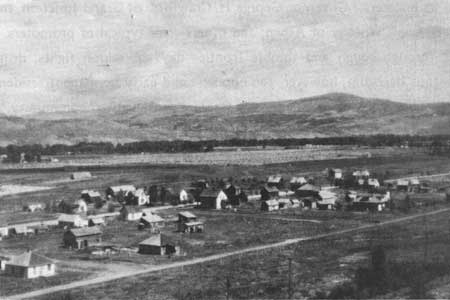
At this point, the newspaper trail goes cold. What was a front-page story disappears completely. I find no mention of my Great Ancestor in the papers for almost another twenty years. When I did, it was nothing more than a legal notice concerning a homestead near present day Capulin, Colorado. It’s only a few sentences long.
I also can’t help but wonder if the troubles that occurred later between the settlers near Meeker and the Utes didn’t have at least some of it’s roots in this incident. The story about what triggered that series of tragedies doesn’t seem to connect this with my ancestor to that incident, but it makes me wonder.
The Mesa County Sheriff’s office doesn’t keep records back that far, but they did suggest a couple of sources for me to try. With luck, I’ll find the Sheriff’s Reports, the court documents (if any), and possibly the missing newspapers.
I see my wife and I spending some time in musty archives one fine day in Grand Junction.
I’ve posted all the articles I found at the links below, and will post as more information comes in.
RESEARCH:
https://www.coloradohistoricnewspapers.org/
https://en.wikipedia.org/wiki/Ouray_(Ute_leader)#Early_life_and_education

If you’re a Veteran in crisis or concerned about one, connect with our caring, qualified Veterans Crisis Line responders for confidential help. Many of them are Veterans themselves. This service is private, free, and available 24/7.
Here’s how you can connect with a Veterans Crisis Line responder, anytime day or night:
- Call 988 and select 1.
- Text 838255.
- Start a confidential chat.
- If you have hearing loss, call TTY: 800-799-4889.
If you’re not a veteran or wish you can also take these actions:
- Call 911.
- Go to the nearest emergency room.
- Go directly to your nearest VA medical center. It doesn’t matter what your discharge status is or if you’re enrolled in VA health care. if not a veteran, go to your nearest hospital.
Find your nearest VA medical center
Discover more from William R. Ablan, Police Mysteries
Subscribe to get the latest posts sent to your email.
 William R. Ablan, Police Mysteries
This is fascinating, Rich. Doing that much research into your family’s past is a real accomplishment.
LikeLike
There’s more to do. What’s interesting is when you start digging, the stories don’t always match the record. The Malouff’s for instance, family verbal history says they came over about 1900. But why do I find them mentioned in newspaper accounts earlier. A big thing that I got yelled at my family concerned my Uncle Neff. He lost a leg in WW II.
Everyone swears he was drafted. But he was in profession that made him vital to the war effort (he was a welder). About the only way they’d take him is if things were really bad. All his brothers were being drafted, he felt bad, walked in an enlisted. The records are there in black and white.
Yet, they swear that’s not the way it happened.
LikeLiked by 1 person