


When we returned to Iraq, we made our report, and then waited. Someone once said that “Waiting is the hardest thing to do.” There’s a lot of truth to that.
Part of that work was to knock Saddam down a little more. While there was a ceasefire in effect and the Gulf War was technically over, we needed to curtail Saddam’s war making ability just a little more.
Closer to us was ruining the airfield we were stationed near.
But until that happened, we had two jobs.
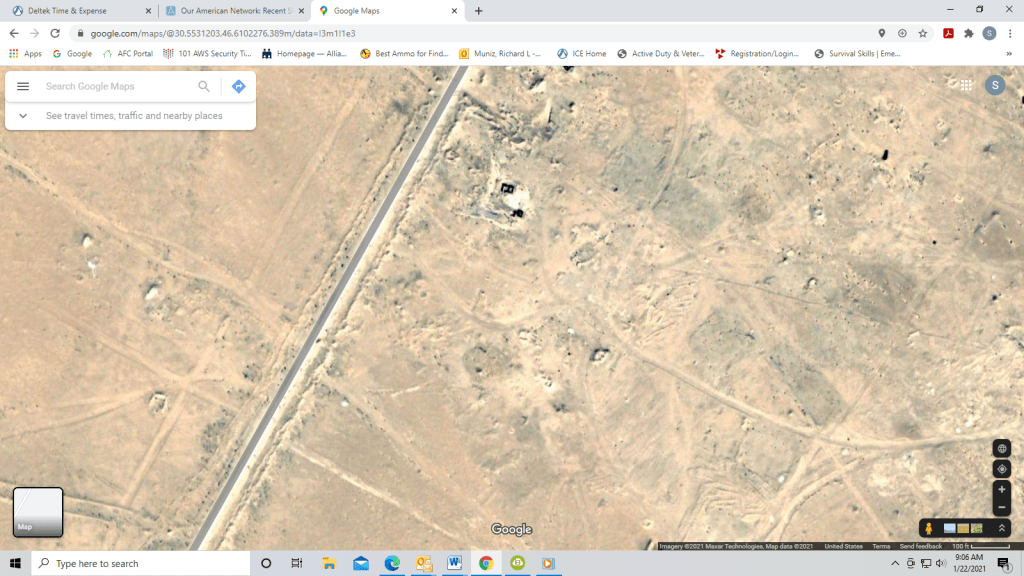
First, to keep an eye on the old airbase and the ammo dump adjacent to it. When the Iraqis left the place, they left bunkers full of ammunition. I’ve already talked about guarding the place.
And the engineers were getting ready to blow it as a final act before we left for good.
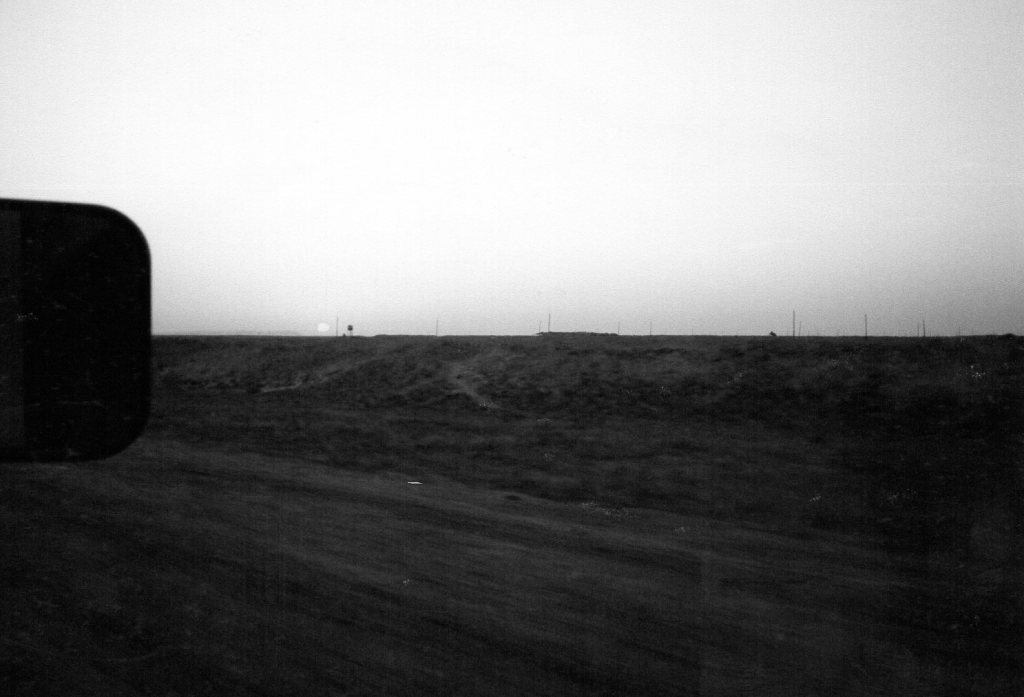
The other job was to conduct routine patrols of the area. Some of these patrols took us as far as the Kuwaiti border. We were mostly just keeping an eye on things and pointing refugees in the direction of Safwan.
In both missions, we’d witness the dismantling of Saddam’s war machine.
As many have noted, some Iraqi troops abandoned lightly damaged tanks, trucks and the like. It sounds strange that they’d abandon a lightly damaged tank. But then it might have taken an hour or two to repair it. We didn’t give them that time. So they either abandoned the vehicle or die.
In most cases, they didn’t have time to destroy them either.
The engineers were more than happy to help with that task.
An example was one fine day while on patrol of the area, we were traveling down a paved road. Ahead of us, we saw several vehicles, and there were a couple of Iraqi tanks off the road. Engineers had blocked the road and a smiling NCO stopped us.
“You guys might want to hold here,” he said. “We’re about to blow up these tanks.”
The reason for blowing up damaged tanks was simple. With a little work, some of these could be returned to service. That or they could become a source of spare parts for other tanks. Same with trucks and other vehicles.
We waited. What the engineers did was to fill the tank with diesel fuel and unless I’m mistaken, ammonia nitrate. Essentially, they made a slow burning bomb. as we watched, they set the mixture ablaze. In a moment flames were coming out of the open hatches.
And then there was a bang. Inside the tank, the stored ammunition was starting to “Cook Off.” What this means is the racked ammo inside had reached a certain temperature and was firing off. Modern day tanks store ammo in what amounts to a locker. This locker is accessed through some kind of sliding door that opens. The gunner or loader pulls out a shell, closes the door, and then loads the shell.
The reason for the locker is simple, to help protect the tank crew from the very event we were witnessing. If the magazine catches fire, the shells explode up through the top of the armor. The idea to vent the force of the explosions contained.
It’s a safety factor to help keep the crew safer. Not sure what the word “Safer” means in this context because if the Ammo is cooking off like that, you’re probably dead anyway. Perhaps one of the Armor readers can tell a little more on that.
I think I was expecting something a little more spectacular, but we never got it. Soon, the fire died down and we were allowed to go past the smoking wrecks. The fire had done it’s job. There would be very little worth salvaging on the tanks.
One thing we got to see, but I didn’t get a picture of was an armor unit destroying captured AKs and assorted small arms. The weapons were laid out in a row, and then ran over with a tank. The weight of the tank and the grinding of the tracks did a great job of reducing the weapons to scrap metal.
A few days before leaving Iraq, we went up north of the airfield we were occupying. A large number of BMPs and trucks were scattered about. There were several trucks that had rolled off the road and we looked over one of the trucks there.
There were a few bullet holes in it.

Several of the bullet holes was almost directly in front of the steering wheel. It was an easy thing to imagine what had happened to the driver. Fortunately, the doors had been left open, and the rains had washed away the blood.
Mechanically, the worst damage seemed to be a bullet hole through the radiator and a single flat tire. Replace those and it appeared the vehicle might have been operational.
A few days later we went through the same site. Each truck had been burnt and all that remained was blackened metal and ashes.
When we left the airfield, there would be no dump. It would be blown up. The runway, which our engineers had made temporary repairs to would be rendered useless. Only a major rebuild would put this place back into business.
For several weeks we watched over the airbase. We’d left it only to do our route recon back into Saudi Arabia. Now came the day we were leaving for good.
Over the last several days, the engineers had been getting the place ready to destroy. Explosives had been deployed, fuses primed, and wires ran. it was a big task but one they were looking forward to. Like us, they wanted to get it done and go home.
We took down our tents, loaded up our gear, and went out to our final assignments.
Our job was simple. We’d establish a parameter some mile from the dump. There were other units helping to form the circle no one would been allowed in to. Other units scouted out the area inside that perimeter to ensure no one was inside it. All we needed was to have some refugees in there and get them killed..
We were told that nothing would travel much more than three quarters of a mile from the site. That meant we’d be safe at that distance. That would prove to be a lie.
We’d been out on station for over an hour when we were approached by a refugee family. There was a man, two children, and several women. There women kept their distance. The man explained in broken English that they were afraid of us.
Through his broken English and gestures, Greg and I figured out they were headed for the refugee camp at Safwan.
We pointed them in the direction they were to go. But they appeared hungry and thirsty. We gave them a case of water and a case of MREs.
Before I left Germany, I’d purchased bags of chewing gum. Most of it was Big Red, Juicy Fruit, and bubble gum. The dry Iraqi air had leached the moisture from the sticks and they were hard. But if you left them in your mouth for a bit, they softened up. I gave the majority of my stock to the kids.

We warned them to move quickly since we’d be blowing the area up. That was a warning they understood.
Like so many people I encountered in that country, I’ve wondered what became of them.
Did they make it alright to Safwan?
What happened afterwards?
Did they leave Iraq behind and seek their fortunes elsewhere? Or did they stay and my son would encounter them years later.
I guess, I’ll never know.
We watched our time closely and I put a fresh roll of film in the camera. What I wanted to do was a time lapse of the destruction of the ammo dump. We waited,
There was the sound of a siren. That was the signal it was about happen. That started a one minute countdown.
A rumble came from the direction of the dump, and then an explosion. Logically, I knew it wouldn’t be one massive explosion, but part of me was hoping for one big bang. It would have been spectacular. But the explosions had to wind from one bunker to another.
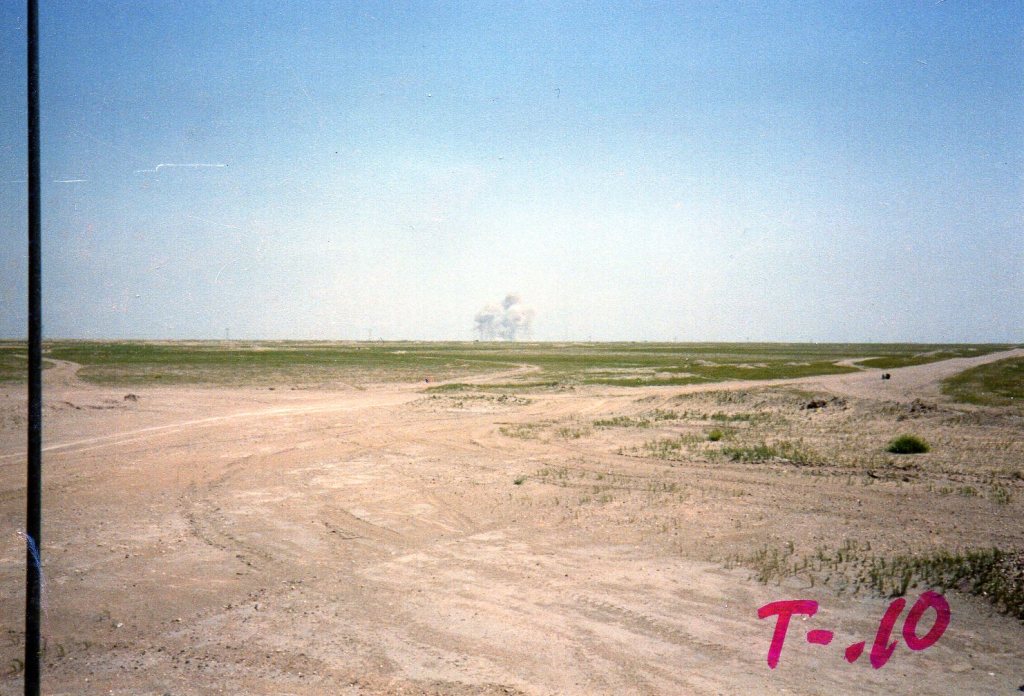
I started taking pictures. Occasionally I’d pause and look through the binoculars. Dust and smoke began billowing up. I could see fire ripping the mounds apart. Sparks arched up and then tipped over and around the depot, puffs of dust and smoke erupted around the dump.
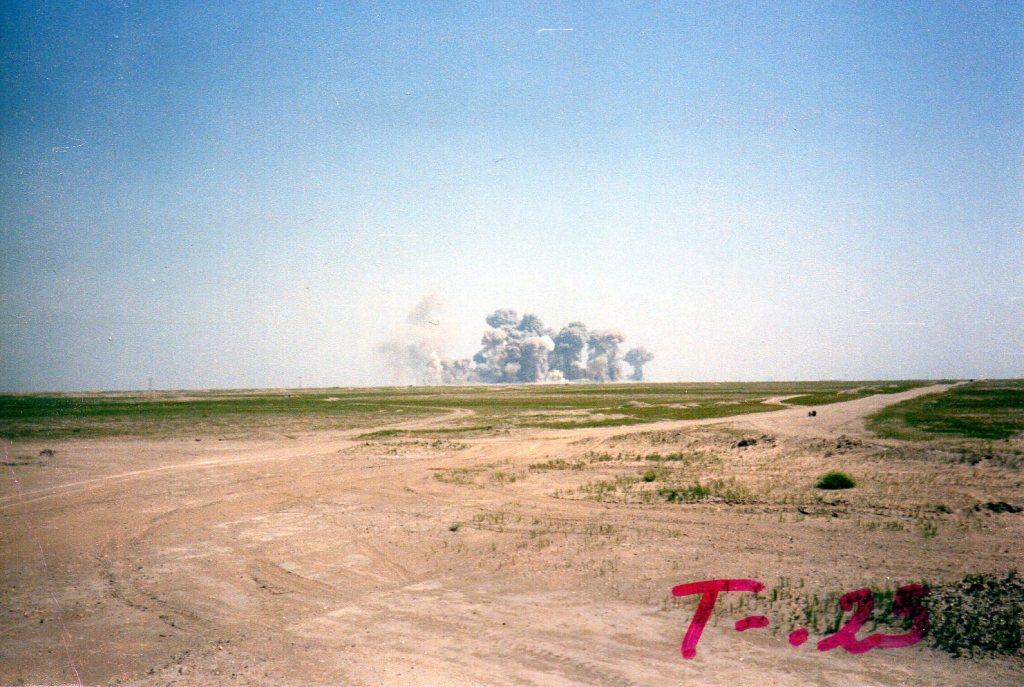
I kept taking pictures and the cloud of dust and smoke began rearing up into the sky.
More gouts of flame exploded into the sky, and now we could hear whistling noises. I remember looking at Greg and he looked at me. We were both wondering if we were supposed to hear that. Whistling meant things they were coming close.
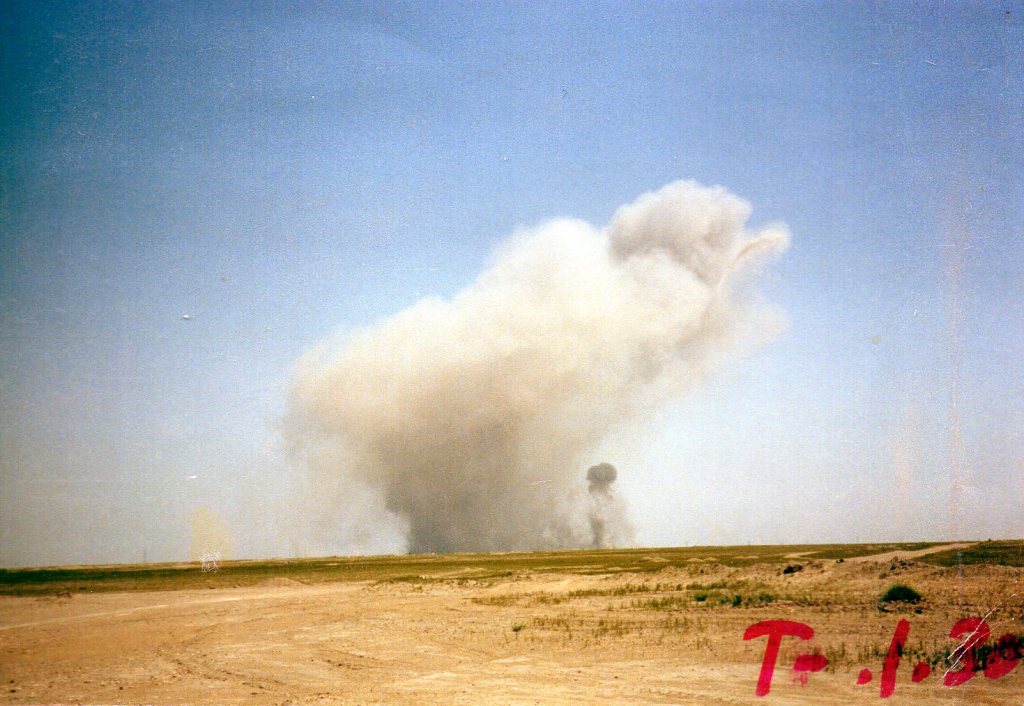
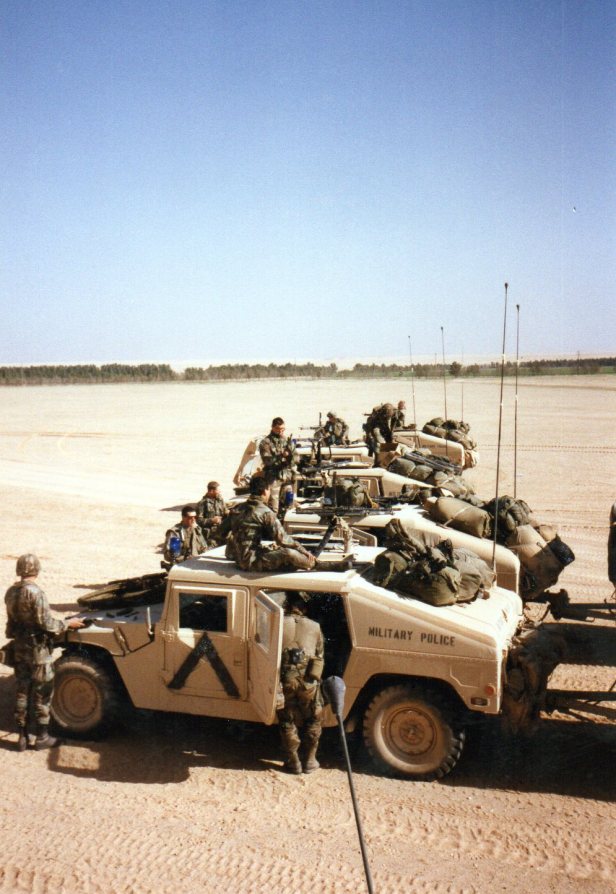
Maybe a quarter of a mile away was another MP HUMVEE. Like us, they were watching the fireworks display. And then more whistling.
This time it was getting louder. All at once, about a hundred meters from their HUMVEE, a round impacted. There was an explosion of rock and dirt.
“Jesus!” I exclaimed.
It wasn’t a curse.
At this point it was a prayer.
Clearly they’d underestimated the range the shells would travel.
I looked to see our platoon members scrambling to put another half mile between them and the dump.
“Sounds like a good idea,” I said. We moved quickly away, stopping after we’d done the same.
Behind us, the explosions intensified.
The sound brought a smile to my face. If you ignored the occasional roar and the whistling, it reminded me of popcorn popping.
We watched as the explosion grew in power.
Now we didn’t need the Binos to see the bunkers erupting open. Fire marched from one bunker to another. There would be roar from the initial blast, and then pops as ammunition went off.
After almost twenty minutes, it was over.
There was another series of explosions from the direction of the airbase. I would later learn that the last of the facilities there, and the runway were destroyed.
“That’s it,” the LT called over the radio. We formed on line, made our last checks and left Iraq behind.
The first really big step home was happening.
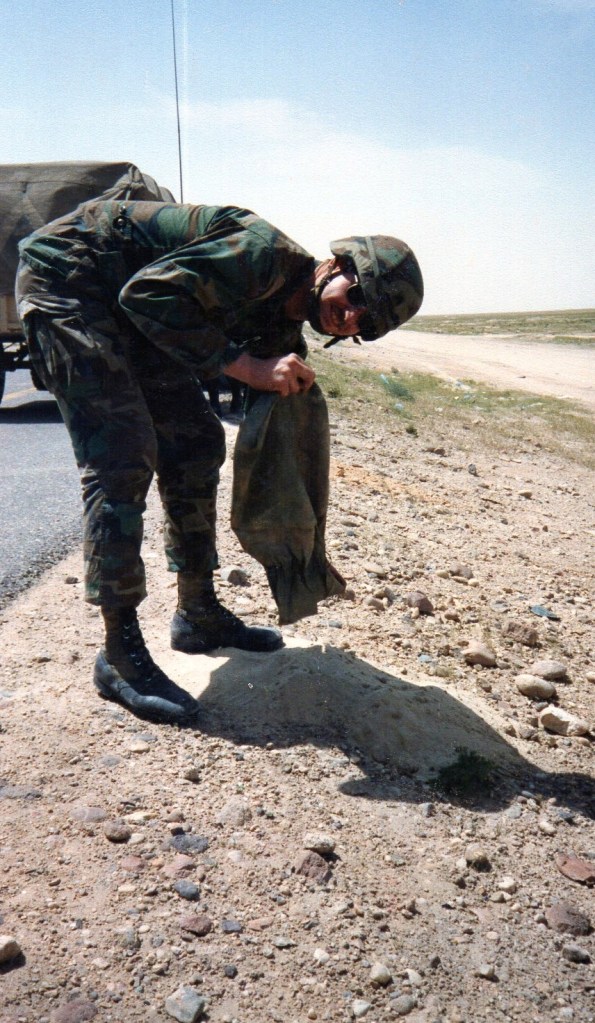
We passed uneventfully through Kuwait and into Saudi Arabia.
About a mile into Saudi Arabia we all pulled over.
There we conducted a ceremony that I call the “The Dumping of the Sand.” The Sandbags we’d filled and armored the turrets and floor of the HUMVEES with were removed.
The bags were opened and the sand dumped back into the nation it had come from.
The moment was cause for celebration.
We wouldn’t be going back into Iraq.
We’d never felt closer to home than that moment. We expected to drive to Daman, turn over the HUMVEEs for shipment and be on a plane out of there.
Of course that would be too easy.
Our destination was KKMC.
All photographs Copyright – Richard L. Muniz (unless indicated by source)

If you’re a Veteran in crisis or concerned about one, connect with our caring, qualified Veterans Crisis Line responders for confidential help. Many of them are Veterans themselves. This service is private, free, and available 24/7.
Here’s how you can connect with a Veterans Crisis Line responder, anytime day or night:
- Call 988 and select 1.
- Text 838255.
- Start a confidential chat.
- If you have hearing loss, call TTY: 800-799-4889.
If you’re not a veteran or wish you can also take these actions:
- Call 911.
- Go to the nearest emergency room.
- Go directly to your nearest VA medical center or. It doesn’t matter what your discharge status is or if you’re enrolled in VA health care. if not a veteran, go to your nearest hospital.
Find your nearest VA medical center
We
Discover more from William R. Ablan, Police Mysteries
Subscribe to get the latest posts sent to your email.
 William R. Ablan, Police Mysteries